Why Does 'La Dolce Vita' Require a New Schedule? A Data-Driven Guide to Navigating Italian Business Hours, Social Rituals, and the Art of the 'Passeggiata'
Synchronizing Your Life with Italian Rhythms
Moving to Italy involves a significant recalibration of how you perceive time. While many newcomers expect a permanent vacation, the reality of 'La Dolce Vita' is built upon a rigid, centuries-old social structure. Research into expat integration shows that those who fail to adapt to local business hours and social rituals experience 40% higher levels of frustration during their first year. Understanding the logic behind the Italian schedule is not just a matter of convenience; it is the foundation of successful relocation.
The Mechanics of the Riposo
The most significant hurdle for North Americans and Northern Europeans is the riposo—the extended midday break. Data from regional commerce chambers indicates that roughly 90% of non-chain retail businesses in Italy close between 12:30 PM and 3:30 PM or 4:00 PM. This is not a 'nap' in the traditional sense, but a period dedicated to the main meal of the day and family connection.
Regional Variances in Business Hours
- Northern Italy (Milan, Turin): Schedules are more aligned with global corporate standards. The riposo may be shorter (1:00 PM to 2:30 PM), and businesses often stay open later in the evening.
- Central and Southern Italy (Rome, Naples, Sicily): The midday closure is strictly observed. In smaller towns, you will find it nearly impossible to buy groceries or visit a bank between 1:00 PM and 4:30 PM.
- Public Offices: Government offices often operate on a mattina (morning) schedule, frequently closing for the day as early as 1:30 PM.
The Passeggiata: Social Capital and Networking
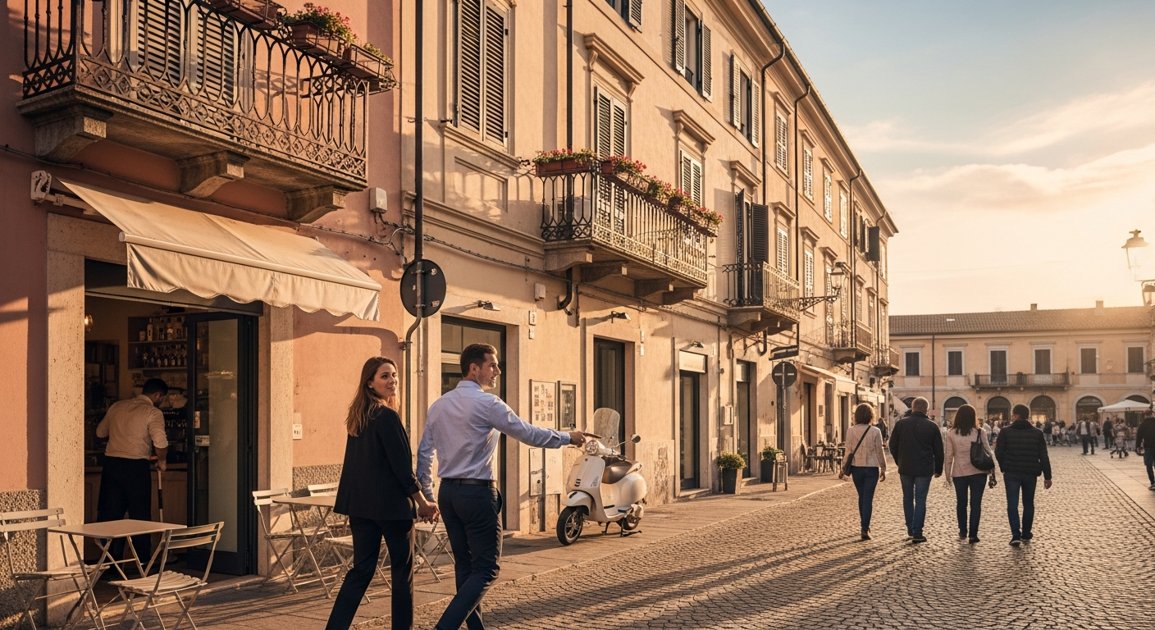
The passeggiata—the evening stroll—occurs typically between 5:00 PM and 7:00 PM. While it appears to be a simple walk, it functions as a critical social ritual for community involvement. In smaller Italian municipalities, the main piazza serves as a physical social network. Observing this ritual is a data-backed method for expats to increase their 'visibility' and build trust with locals. Participating in the 17:00 to 19:00 window signals that you are integrating into the community fabric rather than remaining an isolated observer.
The Late-Night Dining Reality
In Italy, dining is a social event rather than a biological necessity to be rushed. Statistics on Italian hospitality show that peak restaurant occupancy occurs between 8:30 PM and 9:30 PM. Attempting to eat dinner at 6:00 PM will often result in finding closed kitchens or empty dining rooms. Adapting to this requires a shift in your metabolic schedule, often necessitating a larger midday meal and a light snack during the aperitivo hour (6:30 PM to 8:00 PM).
Step-by-Step Guide to Adjusting Your Schedule
- Audit Your Errands: Map out your weekly needs and complete all high-priority banking or administrative tasks before 12:00 PM.
- Leverage the Riposo: If you are a remote worker, use the 1:00 PM to 4:00 PM window for deep work. Since the local world is quiet, distractions are minimized.
- Adopt the Aperitivo: Use the 6:00 PM hour to transition from work to social life. This bridge allows you to sustain energy until the late dinner hour.
- Schedule Social Calls Late: Do not expect to reach Italian friends or neighbors for casual conversation during the riposo; instead, aim for the post-passeggiata window.
Plan Your Move with Precision
Relocating to a country with such distinct social and business structures requires detailed planning and objective data. The NewLife.Help comparison tool analyzes cost of living, regional climate, and infrastructure to help you choose the Italian city that best matches your lifestyle and professional needs. Get a personalized relocation report in seconds to ensure your move is grounded in facts.
Start Your Free Relocation Analysis
Conclusion
The Italian schedule is designed to prioritize human connection and local commerce over the 24/7 convenience model common in other Western nations. By aligning your personal and professional habits with the riposo, the passeggiata, and late-evening dining, you reduce friction and accelerate your integration. True success in Italy is found when you stop fighting the clock and start living according to the rhythm of the community around you.