Golf Carts, Puddle Jumpers, or Your Own SUV? A Data-Driven Guide to Navigating Belize’s Unique Transport Costs and Duty-Free Logistics
The Reality of Transport Logistics in Belize
Relocating to Belize involves a significant shift in how you view personal mobility. Unlike North American or European cities where a single vehicle serves every purpose, Belize’s geography—comprised of rugged mainland terrain and sand-street islands—demands a fragmented approach to transportation. For most expats, the decision boils down to a financial trade-off: pay the high cost of vehicle importation or navigate the recurring expenses of local air and sea transit. This guide provides a data-driven breakdown of these costs and the logistics of the Qualified Retirement Program (QRP) exemptions.
The Logistics of Importing: The QRP Advantage
For those planning to live on the mainland in areas like Cayo or the Stann Creek District, owning a vehicle is often necessary. However, Belize imposes steep import duties on vehicles, often ranging from 35% to 70% of the vehicle’s book value, depending on the engine size and year.
The Qualified Retirement Program (QRP) Exemption
The QRP is the most efficient way to bypass these costs. Under this program, individuals aged 45 and older who meet specific income requirements can import a personal vehicle duty-free. Key facts include:
- Frequency: You are allowed to import a new vehicle every five years under the program.
- Weight Limits: There are specific restrictions on the type of vehicle, generally focused on personal use (cars, light trucks, or SUVs).
- Shipping Costs: Shipping a vehicle from a major U.S. port (like Miami or Houston) to Belize City typically costs between $1,500 and $3,000 USD, excluding port fees and broker commissions.
Maintaining a Vehicle on the Mainland
If you choose to import, factor in the accelerated depreciation caused by the environment. Belize’s roads range from well-paved highways to unpaved limestone tracks. Mechanics are affordable, but parts for specific European or high-end American models can take weeks to arrive and incur high shipping fees. Stick to brands with local parts availability, such as Toyota or Isuzu.
Life on the Cayes: Why Your SUV Stays in the City
If your destination is Ambergris Caye or Caye Caulker, importing an SUV is often impossible or impractical. The government strictly limits full-sized vehicles on the islands to commercial use or specific permits that are difficult for residents to obtain.
The True Cost of Golf Cart Ownership
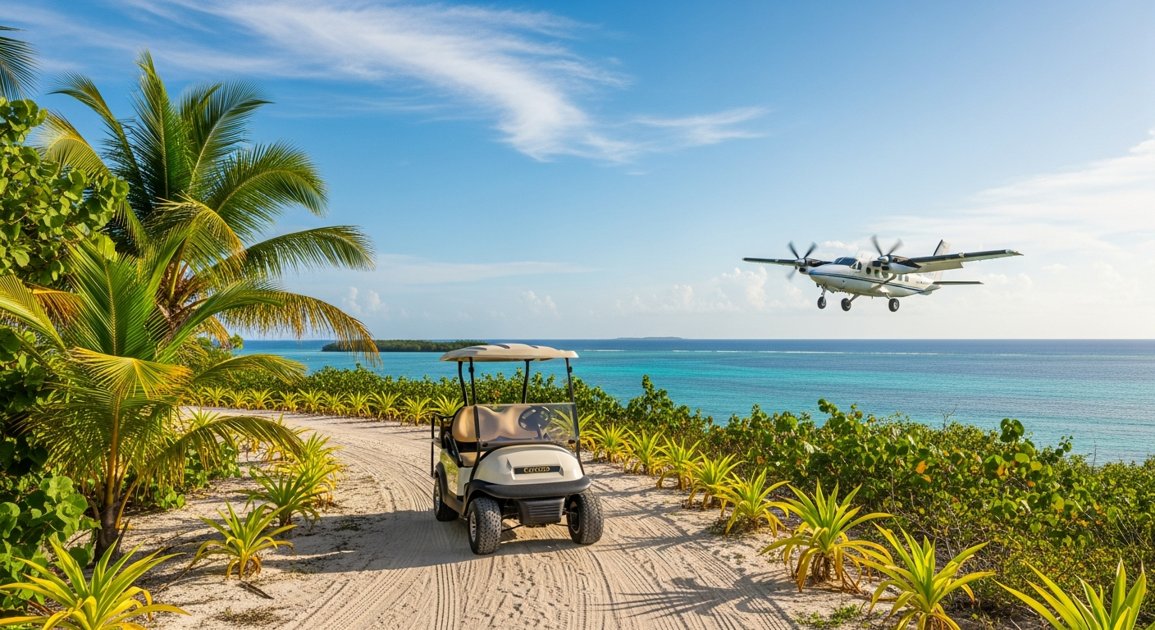
Golf carts are the primary mode of transport on the islands. While they look like toys, their costs are comparable to small cars:
- Purchase Price: A new, gas-powered 4-seater cart costs between $10,000 and $15,000 USD. Used carts rarely drop below $6,000 USD.
- Permit Fees: You must obtain a permit from the local Town Council to own a cart. These permits are limited in number and require an annual fee.
- Operational Costs: Gas is significantly more expensive in Belize than in the U.S. or Mexico. Expect to spend $40–$60 USD per month on fuel for moderate island use, plus frequent battery or suspension maintenance due to salt air corrosion.
Regional Transit: Puddle Jumpers and Water Taxis
For many expats, the most efficient way to navigate the country is to forego vehicle ownership entirely and rely on the established network of small-aircraft carriers and ferries.
The Domestic Flight Network
Carriers like Tropic Air and Maya Island Air operate "puddle jumpers" that connect the international airport (BZE) to various hubs. A one-way flight from Belize City to San Pedro takes 15 minutes and costs approximately $90–$110 USD. For a couple commuting once a week, this adds up to over $800 a month—a cost that may exceed a monthly car payment and insurance on the mainland.
Water Taxis
Water taxis are the budget-friendly alternative. A round-trip ticket from Belize City to San Pedro costs roughly $60 USD. It is a viable option for those who have more time than money, though it requires coordinating with mainland taxi services to reach the terminals.
A Step-by-Step Logistics Plan
- Audit Your Location: If living on the islands, budget for a golf cart and regular water taxi/flight fees. If mainland, prioritize the QRP application before purchasing a vehicle.
- Verify Parts Availability: Research if your preferred vehicle brand has a dedicated dealership or mechanic in Belize City or Spanish Lookout.
- Calculate Port and Broker Fees: Even with QRP, you will pay roughly $500–$1,000 USD in administrative and brokerage fees to clear customs.
- Test Local Transit First: Rent a golf cart or use public buses for the first three months to determine if you actually need a private vehicle.
Plan Your Move with Precision
Navigating the specific costs of Belizean transport requires a localized strategy that accounts for your specific residency status and destination. The NewLife.Help comparison tool analyzes your relocation variables to provide a personalized report on expected costs, duty exemptions, and logistics in seconds. Take the guesswork out of your budget and focus on your transition with data-driven insights.
Start Your Free Relocation Analysis
Conclusion
Choosing the right transport strategy in Belize is a balance of upfront investment versus long-term operational costs. While the QRP program offers a significant advantage for those importing vehicles to the mainland, the unique environment of the Cayes demands a different financial approach centered on golf carts and regional flights. By analyzing these data points before you arrive, you can ensure your relocation budget remains sustainable and your mobility is never a barrier to enjoying your new home.