Why Your Grocery Bill in Morocco Will Drop by 40%: A Data-Driven 2026 Guide to the 'Hanout' Economy, Souk Budgeting, and Fiber-Optic Reality
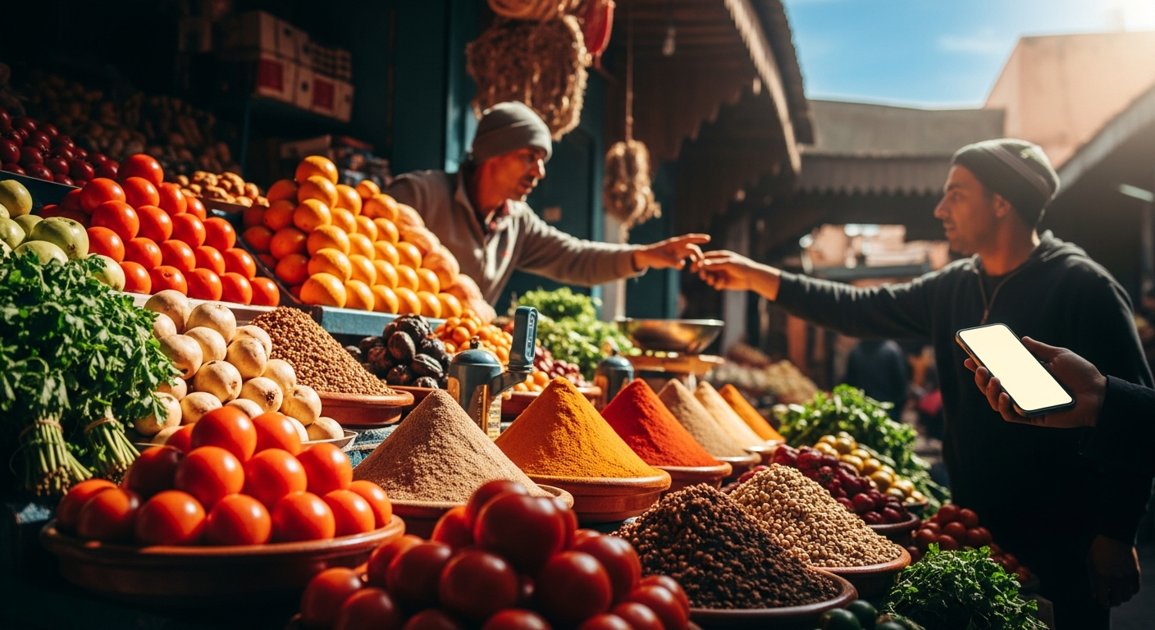
Why Your Grocery Bill in Morocco Will Drop by 40%: A Data-Driven 2026 Guide to the 'Hanout' Economy, Souk Budgeting, and Fiber-Optic Reality
Most expats landing in Casablanca or Marrakech expect a modest reduction in expenses, but the reality is more radical: shifting your consumption habits to the local ecosystem can slash your monthly food spend by nearly half. When calculating the moving to morocco cost of living, many newcomers mistakenly look at prices in high-end supermarkets like Carrefour or Marjane, where imported cheeses and packaged goods mirror European price points. However, the true economic engine of Morocco resides in the 'hanout' and the weekly 'souk.' By integrating into these traditional systems, an individual can maintain a high-quality, nutrient-dense diet for a fraction of what they would pay in North America or the EU, even accounting for the moderate inflation projected into 2026.
Understanding the Moving to Morocco Cost of Living Breakdown
To accurately assess the moving to morocco cost of living, one must understand the dual-market system. There is the 'modern' economy, which serves the upper-middle class and tourists with fixed prices and barcodes, and the 'traditional' economy, which provides the majority of the population with fresh produce, grains, and household essentials. In 2026, while global supply chains remain volatile, Morocco’s domestic agricultural sector continues to insulate local markets from the worst of global price spikes. For an expat, the difference between these two markets represents the 'foreigner tax'—a self-imposed premium paid for familiarity and convenience.
The Hanout Economy: Your Neighborhood Logistics Hub
The hanout is a small neighborhood grocery store, often no larger than a walk-in closet, yet packed floor-to-ceiling with everything from loose lentils and individual eggs to dish soap and SIM cards. It is the backbone of Moroccan daily life. Unlike Western convenience stores, which charge a premium for speed, the hanout offers competitive pricing on staples because of its low overhead and direct relationship with local distributors.
Building Rapport and Establishing the 'Notebook'
In the hanout economy, prices for staples like bread (khobz), sugar, and oil are often regulated by the government. In 2026, a standard loaf of bread remains roughly 1.20 MAD (approximately $0.12 USD). One of the most practical pieces of advice for a new resident is to identify their local hanouti (the shopkeeper) and become a regular. Not only does this ensure you receive the freshest arrivals, but it also allows you to enter the informal credit system. Many locals maintain a small notebook at the hanout where daily purchases are recorded and settled at the end of the week or month. This isn't just a financial tool; it is a social contract that signals you are a resident, not a transient tourist, effectively neutralizing any attempt at 'tourist pricing' on non-regulated items.
Mastering the Souk: Where the 40% Savings Live
While the hanout is for daily needs, the souk is for bulk purchasing. Whether it is a permanent marketplace in a city center or a weekly traveling market in rural areas, the souk is where the 40% reduction in your grocery bill actually happens. In the US or UK, produce often travels thousands of miles; in a Moroccan souk, the tomatoes, citrus, and peppers were likely harvested within a 50-mile radius less than 48 hours ago.
Seasonal Cycles and 2026 Price Indices
To maximize savings, you must eat seasonally. Buying strawberries in December will cost a premium, but during the peak of spring, they are virtually given away. By 2026, data suggests that the following price points are standard for high-quality, organic-grade produce in a typical urban souk:
| Item | Quantity | Estimated Cost (MAD) | Estimated Cost (USD/EUR) |
|---|---|---|---|
| Tomatoes | 1 kg | 5 - 8 MAD | $0.50 - $0.80 |
| Potatoes | 1 kg | 4 - 6 MAD | $0.40 - $0.60 |
| Oranges | 1 kg | 4 - 7 MAD | $0.40 - $0.70 |
| Chicken (Live/Fresh) | 1 kg | 18 - 25 MAD | $1.80 - $2.50 |
| Eggs (Farm) | 12 units | 15 - 18 MAD | $1.50 - $1.80 |
| Olive Oil (Press-Direct) | 1 Liter | 80 - 110 MAD | $8.00 - $11.00 |
Comparing these figures to a typical grocery bill in London, New York, or Paris reveals the massive arbitrage opportunity. A weekly haul of fresh vegetables, fruits, and proteins that would cost $150 in the US can be secured for roughly $40 in a Moroccan souk.
Technical Infrastructure and Moving to Morocco Cost of Living Essentials
A common concern for digital nomads and remote families is whether the lower cost of living comes at the expense of digital reliability. As of 2026, Morocco has cemented its position as a regional leader in telecommunications. The 'Fiber-Optic Reality' in Morocco is that high-speed internet is no longer a luxury reserved for the elite districts of Casablanca.
Fiber-Optic Internet and 5G in 2026
Most major cities—and an increasing number of smaller towns like Taghazout and Essaouira—are serviced by extensive fiber-optic networks. Providers such as Maroc Telecom, Orange, and Inwi offer reliable symmetrical connections. For a 100 Mbps fiber line, expect to pay approximately 250 to 500 MAD per month ($25 - $50 USD). 5G coverage is now standard in urban centers, providing a robust failover option for those whose livelihoods depend on constant connectivity.
Utilities: Water, Electricity, and Butane
Utilities in Morocco operate on a tiered pricing system; the more you consume, the higher the rate per unit. For a standard two-bedroom apartment, monthly electricity and water bills typically range from 400 to 800 MAD ($40 - $80 USD), depending heavily on air conditioning usage. A crucial detail for newcomers is the 'gas bottle' system. Most Moroccan homes do not have piped gas. Instead, they use butane canisters for cooking and hot water. A large 12kg bottle, which typically lasts a small family about 3 to 4 weeks, is government-subsidized and costs a flat 40 MAD ($4.00 USD).
Practical Steps to Avoid the 'Foreigner Tax'
- Learn Basic Darija: You do not need to be fluent, but knowing numbers and basic greetings in Moroccan Arabic (Darija) signals to vendors that you understand the local market value.
- Carry Cash: While supermarkets and malls accept cards, the hanout and the souk are strictly cash economies. Having small denominations (10, 20, and 50 MAD notes) is essential.
- Observe Before Buying: Spend ten minutes watching locals interact with a vendor. Note what they pay and how they select their produce. Price transparency is high in the souk if you pay attention.
- Avoid Pre-Packaged Goods: If you buy imported pasta, cereal, or snacks, you will pay 20-30% more than you would in Europe. Stick to the 'bulk' sections for flour, spices, and legumes.
Frequently Asked Questions
What is the average monthly budget for a couple moving to Morocco?
While lifestyles vary, a couple can live comfortably in a mid-sized city for 12,000 to 18,000 MAD ($1,200 - $1,800 USD) per month. This includes a modern apartment, high-speed internet, utilities, and a high-quality diet based on the hanout and souk economy. This budget allows for occasional dining out and local travel.
Is tap water safe to drink in Morocco?
In major cities, tap water is treated and generally safe for cooking and brushing teeth. However, many expats and locals prefer filtered or bottled water for drinking due to the high mineral content and varying pipe quality in older buildings. A 5-liter water bottle costs approximately 10-12 MAD ($1.00 USD).
How do healthcare costs factor into the cost of living?
Morocco has a two-tier healthcare system. Private clinics in cities like Rabat and Marrakech offer high-quality care at a fraction of Western costs. A consultation with a specialist typically costs 300 to 500 MAD ($30 - $50 USD). Most expats opt for international private insurance, which remains affordable compared to US premiums.
Are there hidden costs when renting an apartment?
When calculating the moving to morocco cost of living, factor in the 'syndic' fee. This is a monthly building maintenance fee (similar to HOA fees) that ranges from 100 to 500 MAD. Also, be aware that most rentals are unfurnished, meaning you will need to budget for appliances like a refrigerator and washing machine, which are priced similarly to European markets.
Conclusion
The transition to a Moroccan lifestyle offers more than just a change of scenery; it offers a total recalibration of your relationship with consumption. By stepping away from the standardized, high-markup world of international supermarkets and embracing the local hanout and souk systems, you can achieve a 40% reduction in your grocery expenses while actually increasing the quality and freshness of your food. Coupled with the reliable fiber-optic infrastructure of 2026 and affordable utility costs, Morocco presents a compelling case for anyone looking to optimize their cost of living without sacrificing professional connectivity or quality of life. The key is to move with intention, observe the local rhythm, and participate in the community economy that has sustained this nation for centuries.
Ready to Plan Your Move?
Download our comprehensive 2026 Relocation Checklist and get detailed neighborhood guides to help you find the perfect balance between traditional charm and modern convenience. Start your new chapter with confidence.