Why Your 2026 Retirement in Finland Depends on the ‘Kela’ System: A Data-Driven Guide to Healthcare Access, Residence Permits, and Pension Taxation
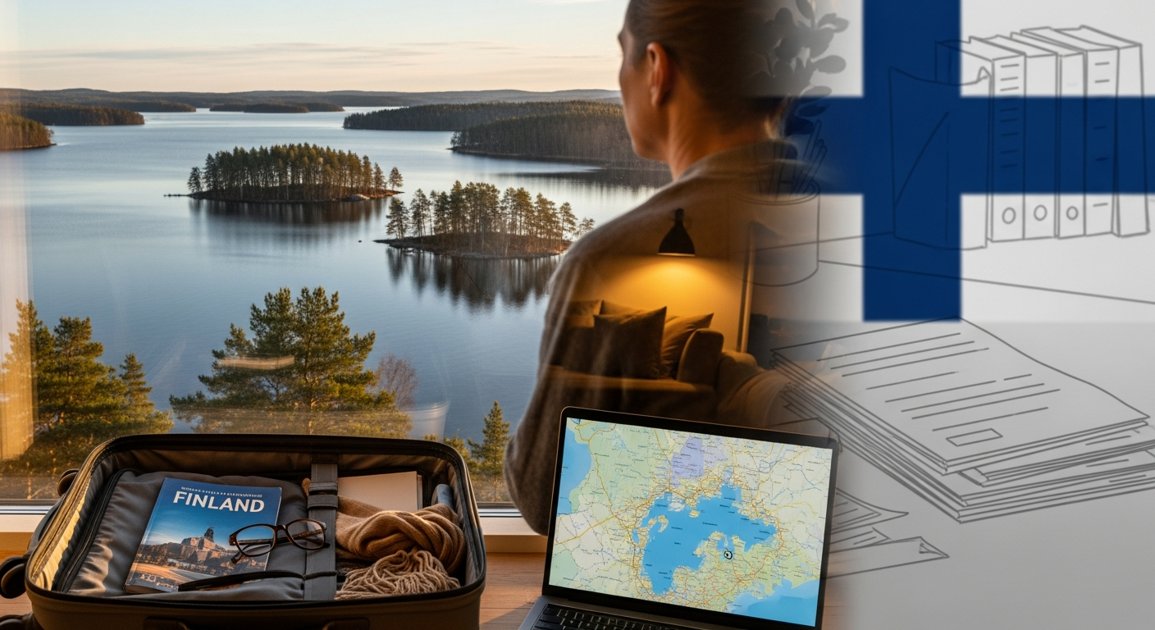
Finland has consistently ranked as the world’s happiest country for seven consecutive years, driven by high levels of social trust, safety, and a robust welfare state. For those looking to relocate to the Nordics, meeting the retiring in finland requirements 2026 involves more than just a desire for quiet lakes and clean air; it requires a meticulous understanding of the Kela system, residency laws, and the fiscal implications of moving international wealth into the Finnish tax net.
Understanding the Legal Framework and Retiring in Finland Requirements 2026
To successfully retire in Finland, you must first clear the hurdle of legal residency. The requirements differ significantly depending on whether you hold a passport from an EU/EEA member state or a non-EU country. In 2026, the Finnish Immigration Service (Migri) continues to prioritize financial self-sufficiency for retirees.
Residency for EU/EEA Citizens
EU citizens do not need a visa to enter Finland. However, if you plan to stay for more than 90 days, you must register your right of residence. The primary requirement is demonstrating that you have sufficient funds to support yourself and any dependents without relying on Finnish social assistance. This is usually proven through pension statements, bank balances, or investment portfolios.
Residency for Non-EU Citizens (Third-Country Nationals)
For retirees from the United States, Canada, the UK, or Australia, the path is more complex. You must apply for a first residence permit, typically under the category of "Other Grounds." Unlike work-based permits, this requires you to prove a "strong tie" to Finland or a compelling reason for residency. Often, this is interpreted as having sufficient independent means. In 2026, the expected monthly income threshold for a single retiree is roughly €1,200 to €1,500 after housing costs, though this is subject to inflation-based adjustments.
Decoding Kela: The Gatekeeper of Finnish Social Security
The Social Insurance Institution of Finland, known as Kela, is the central pillar of the Finnish welfare state. For a retiree, being "Kela-covered" is the difference between affordable, high-quality healthcare and paying full private market rates for every medical intervention.
Eligibility Criteria for Foreign Retirees
Access to Kela benefits is generally based on permanent residence. Under the 2026 regulations, a person is considered a permanent resident if they have a residence permit for at least one year and their actual home and primary interests are in Finland. Once registered in the Population Information System and granted a Finnish personal identity code (henkilötunnus), you can apply for a Kela card.
What the Kela Card Covers
- Reimbursements for Private Medical Costs: While small, Kela provides partial refunds for private doctor visits and dental care.
- Prescription Medication: Finland has a sophisticated medicine reimbursement system. Once you hit an annual out-of-pocket maximum (the "lääkekatto"), Kela covers the remainder of your costs for the year.
- Travel Costs: Kela provides reimbursements for travel expenses incurred while seeking medical treatment if the costs exceed a specific threshold.
The Finnish Healthcare System: Sote-Uudistus and Beyond
In 2026, the healthcare landscape in Finland is managed by regional Wellbeing Services Counties (wellbeing services counties or "hyvinvointialueet"). This system, established to streamline care, ensures that regardless of where you live—from Helsinki to Rovaniemi—the quality of care remains standardized.
Primary vs. Specialized Care
As a resident retiree, you will primarily interact with your local health center (terveysasema). For specialized needs, such as cardiology or oncology, you are referred to a central or university hospital. The cost of a GP visit at a public health center is nominal (often around €20-€40), and there is an annual cap on healthcare fees. Once this cap is reached (approximately €700-€800 in 2026 projections), public services are essentially free for the remainder of the calendar year.
Essential Retiring in Finland Requirements 2026 for Healthcare Access
| Requirement | EU/EEA Citizen | Non-EU Citizen |
|---|---|---|
| Residence Permit | Registration after 90 days | Must be secured prior to arrival |
| Kela Card Application | Eligible if moving permanently | Eligible if permit is for >1 year |
| Health Insurance | EHIC for transition; Kela later | Comprehensive private insurance required for permit |
| Registration of Domicile | Local DVV office | Local DVV office |
Financial Realities: Taxation of International Pensions
Finland’s tax system is progressive and comprehensive. Understanding how your foreign pension is taxed is vital to ensuring your retirement budget is sustainable. Finland taxes the worldwide income of its residents, meaning any pension paid from your home country will be subject to Finnish tax law, though bilateral tax treaties prevent double taxation.
Tax Treaties and Pension Income
Finland has extensive tax treaties with over 70 countries. Generally, these treaties dictate that the source country has the primary right to tax a government pension (e.g., a civil service pension), while private pensions are often taxed in the country of residence (Finland). For example, under the US-Finland tax treaty, Social Security payments are typically taxed in the country of residence.
The Finnish Tax Rate for Retirees
Pensioners in Finland pay:
- State Income Tax: A progressive rate ranging from 0% to approximately 31%.
- Municipal Tax: A flat rate set by your local municipality, usually between 4.4% and 10.8% in 2026.
- Public Broadcasting Tax: A small annual fee (Yle-vero).
- Healthcare Contribution: A small percentage (roughly 1.5%) added to the tax rate for those receiving pension income.
It is worth noting that Finland offers a "Pension Income Allowance" in both state and municipal taxation, which ensures that those with very low pensions pay little to no tax. However, for most expatriate retirees with significant foreign pensions, the effective tax rate will likely be higher than in their home country.
Step-by-Step Guide to Relocation Logistics
Fulfilling the retiring in finland requirements 2026 requires a phased approach. Skipping a step can lead to delays in healthcare access or residence permit denials.
Phase 1: Financial and Legal Preparation (12-6 Months Before)
Secure an apostilled version of your birth certificate, marriage certificate, and pension statements. If you are a non-EU citizen, consult with the Finnish Embassy to determine the exact financial threshold for the "Other Grounds" residence permit. Open a Finnish-compatible bank account if possible, or ensure your current bank can provide the necessary statements for the last six months of transactions.
Phase 2: The Permit and DVV Registration (3 Months Before - Arrival)
Apply for your residence permit via the Enter Finland portal. Upon arrival, your first stop must be the Digital and Population Data Services Agency (DVV). This is where you register your address and receive your Finnish personal identity code. Without this code, you cannot open a local bank account, get a phone contract, or apply for Kela.
Phase 3: Kela and Vero (First Month in Finland)
Once you have your identity code and a permanent address, apply for your Kela card online or at a local office. Simultaneously, visit the Tax Administration (Vero) office. You will need a "Tax Card" (verokortti) for your pension income. Providing your foreign pension details to Vero ensures that you are taxed correctly from the start, avoiding a large bill at the end of the fiscal year.
Frequently Asked Questions
Do I need to speak Finnish to retire in Finland?
While most Finns speak excellent English, especially in the healthcare and government sectors, all official Kela and Vero documents are primarily in Finnish or Swedish. For daily life, English is sufficient, but navigating the bureaucracy is significantly easier with basic Finnish skills or the assistance of a relocation consultant.
Can I use my private health insurance instead of Kela?
Non-EU citizens must have private health insurance to obtain their initial residence permit. However, once you are registered with Kela, the public system becomes your primary provider. You may choose to keep private insurance to access private clinics faster, but it is not a substitute for the mandatory social security registrations if you are a permanent resident.
How is the cost of living for retirees in 2026?
Finland is more expensive than Southern Europe but comparable to the UK or the US Northeast. Housing is the largest expense, with a two-bedroom apartment in Helsinki costing between €1,200 and €1,800 per month. Outside the capital region, in cities like Tampere or Kuopio, costs drop by 20-30%.
What happens to my home country's pension when I move?
Most countries will continue to pay your pension into your existing bank account or wire it to a Finnish account. You must notify your home country's pension authority of your move. Finland will then claim the right to tax that income based on the applicable tax treaty.
Conclusion
Retiring in Finland offers an unparalleled quality of life, defined by social stability and an world-class healthcare system. However, the path to residency is governed by strict administrative protocols. By meticulously following the retiring in finland requirements 2026—specifically the integration into the Kela system and the proactive management of your tax profile—you can ensure a stable transition. Finland does not offer a "retirement visa" in the traditional sense; instead, it offers a place within a society that values its seniors, provided they contribute fairly to the system that supports them. Prepare your documentation early, understand your tax obligations, and you will find the Finnish bureaucracy to be predictable, transparent, and fair.
Ready to Plan Your Finnish Retirement?
Navigating the Kela system and international tax treaties can be complex. For personalized advice on residence permits and financial planning for your 2026 move, consult with a certified relocation specialist or visit the official Migri and Kela portals today.