Why You Don’t Need a Car in Swedish Cities in 2026
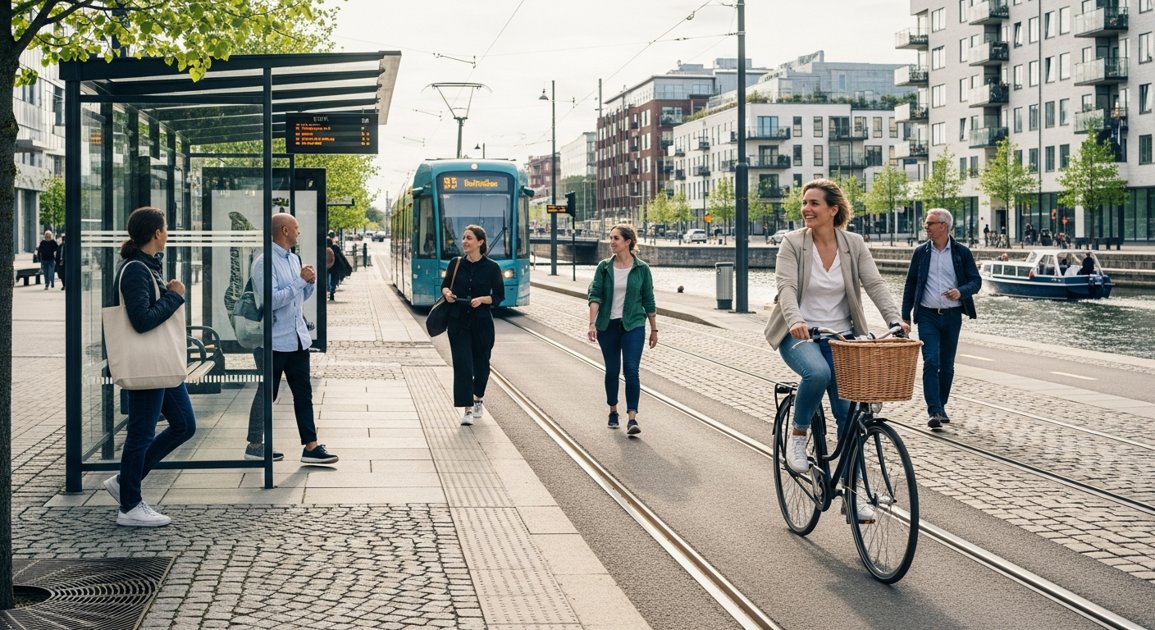
In 2026, owning a private vehicle in a major Swedish city is no longer a symbol of convenience; it is a significant financial and logistical burden. Statistics from the Swedish Transport Administration (Trafikverket) indicate that the average resident in Stockholm, Gothenburg, or Malmö now saves over 65,000 SEK annually by opting out of car ownership in favor of integrated transit networks. As Sweden pushes toward its goal of becoming one of the world's first fossil-free welfare nations, urban infrastructure has been radically redesigned to prioritize pedestrians, cyclists, and transit users. This sweden public transport guide 2026 provides the essential data and logistical frameworks you need to navigate the country’s urban centers without the overhead of a private car.
The Economics of Car Ownership vs. Public Transit
To understand why car ownership is declining, one must look at the hard numbers. In 2026, the cost of maintaining a vehicle in Sweden includes high insurance premiums, rising congestion taxes, and the mandatory transition to electric vehicle (EV) charging infrastructure, which is often expensive to install in older apartment blocks.
Comparative Monthly Cost Breakdown (Estimated 2026 Prices)
| Expense Category | Private Car (EV/Hybrid) | Public Transit (Regional Pass) |
|---|---|---|
| Monthly Subscription/Pass | N/A | 1,020 SEK – 1,300 SEK |
| Insurance & Tax | 1,200 SEK | 0 SEK |
| Parking (City Center) | 2,500 SEK – 4,500 SEK | 0 SEK |
| Congestion Charges (Stockholm/Gothenburg) | 1,500 SEK | 0 SEK |
| Maintenance & Charging/Fuel | 1,000 SEK | 0 SEK |
| Total Monthly Estimate | 6,200 SEK – 8,200 SEK | 1,020 SEK – 1,300 SEK |
By relying on the regional networks, an individual retains approximately 5,000 SEK to 7,000 SEK in disposable income every month. For families, the savings are even more pronounced, as student and youth discounts significantly lower the cost of transport for children, whereas a family-sized vehicle incurs higher purchase prices and insurance rates.
A Sweden Public Transport Guide 2026: Regional Network Deep Dive
The efficiency of Swedish transit is rooted in its regional autonomy. Each major metropolitan area is governed by a specific transit authority that integrates trains, buses, trams, and even ferries into a single ticketing system.
Stockholm: The SL Network
The Stockholm region is served by Storstockholms Lokaltrafik (SL). In 2026, the system has expanded with the completion of new underground lines (Gröna Linjen extension) and increased frequency on the Pendeltåg (commuter rail). Most residents in the inner city are within a 400-meter walk of a subway entrance or a high-frequency bus stop. In 2026, the SL system operates on a 100% renewable energy mandate, making it one of the cleanest networks globally.
Gothenburg: Västtrafik and the Tram Evolution
Gothenburg relies heavily on its iconic tram network. By 2026, Västtrafik has introduced autonomous feeder buses that connect residential outskirts to the primary tram and rail arteries. The city’s congestion zone has also expanded, making it financially impractical to drive into the central business district. For those living in the archipelago, Västtrafik ferries are fully integrated into the standard monthly pass, providing a transit link that functions as efficiently as a mainland bus.
Malmö and Skåne: Skånetrafiken
Malmö serves as a hub for the entire southern region. The MalmöExpressen—a high-capacity bus rapid transit (BRT) system—provides subway-like frequency without the need for underground tunnels. Furthermore, the Öresundståg connects Malmö to Copenhagen every 15 minutes, allowing for international commuting that is faster than driving across the Öresund Bridge when accounting for border checks and traffic.
Digital Integration in Your Sweden Public Transport Guide 2026
The primary reason for the high adoption rate of public transit in 2026 is the technological integration of the "Mobility as a Service" (MaaS) model. You no longer need physical plastic cards or multiple apps to travel across the country.
Universal Ticketing and Payment
- Contactless Payment: All readers across Sweden now accept international contactless debit and credit cards for single trips.
- The National Transit App: A unified application allows users to purchase tickets for SL, Västtrafik, and Skånetrafiken in one place, automatically calculating the cheapest fare based on your travel patterns.
- Biometric Integration: For long-term residents, optional facial recognition or phone-based proximity sensors allow for "hands-free" boarding on commuter trains.
Real-Time Data and AI Routing
Commuters in 2026 benefit from AI-driven route planning. Apps now provide real-time crowding data, allowing you to choose the car on a train with the most available seating. If a delay occurs, the system automatically suggests alternative routes involving e-scooters or city bikes, often including a discount code to compensate for the inconvenience.
The Role of Micro-Mobility and Car-Sharing
Not having a car doesn't mean you never have access to one. The 2026 urban model in Sweden is built on the concept of "right-sized" transport. For 95% of your trips, transit or a bicycle is sufficient. For the remaining 5%, Sweden has the most densified car-sharing market in Europe.
Car-Sharing Services
Services like Volvo On Demand and various cooperative car-sharing clubs have replaced private ownership. These vehicles are parked in designated "mobility hubs" located in almost every neighborhood. You book by the hour via an app, and the cost includes insurance and fuel/charging. This is ideal for grocery hauls, moving furniture, or weekend trips to a summer cabin.
Bicycle Infrastructure
Swedish cities have invested billions into "bicycle highways" that are cleared of snow before car lanes during winter. In 2026, many employers offer "bike-to-work" tax incentives, and most new apartment buildings are required to provide heated, secure bike storage and repair stations.
Practical Advice for New Residents and Expats
If you are relocating to Sweden in 2026, follow these steps to establish your mobility without buying a car:
- Download the Regional App Immediately: Even before you arrive, download the app for your specific city (SL for Stockholm, etc.) to understand the zone systems.
- Register for a Swedish BankID: This digital ID is essential for subscribing to monthly passes and accessing car-sharing services.
- Assess Your "Last Mile": When looking for housing, prioritize locations within 10 minutes of a "Knupunkt" (transport hub). This will negate the need for a secondary mode of transport.
- Utilize Corporate Benefits: Many Swedish companies offer subsidized annual transit passes as part of their sustainability packages. Check your contract before purchasing a pass yourself.
Frequently Asked Questions
How do I handle moving large items or furniture without a car?
Most Swedes use car-sharing services for large errands. For furniture, major retailers like IKEA offer same-day electric van delivery for a flat fee that is significantly lower than the cost of maintaining a private vehicle. Additionally, "Freetrailer" services allow you to rent trailers for free or a nominal fee if you have access to a shared car with a tow bar.
Is public transport reliable during the harsh Swedish winter?
Yes. By 2026, Swedish rail and bus networks have implemented advanced weather-resilience technologies, including heated tracks at critical junctions and automated snow-clearing fleets. While extreme blizzards may cause occasional delays, the system is designed to remain operational in sub-zero temperatures.
Can I travel between cities easily without a car?
Sweden’s inter-city rail network, operated by SJ, Snälltåget, and Vy, is extensive. High-speed trains connect Stockholm, Gothenburg, and Malmö hourly. For more remote areas, the regional bus network (Länstrafiken) ensures that even smaller villages are accessible, though frequencies are lower than in urban centers.
Are there discounts for seniors or students?
Absolutely. Sweden offers substantial discounts (often 25-40% off) for students, individuals under 20, and seniors over 65. Many regions also offer "group tickets" or "family weekend" rates where children travel for free when accompanied by a paying adult.
Conclusion
Choosing to live car-free in a Swedish city in 2026 is a pragmatic decision that aligns with the country’s economic and environmental trajectory. The combination of high-frequency rail, integrated digital payment systems, and the rising overhead of vehicle maintenance makes public transit the superior choice for the vast majority of residents. By utilizing the data and strategies outlined in this guide, you can navigate Sweden with higher efficiency and significantly lower costs. For more information on settling into your new life, visit our resource center for updated relocation advice and cost-of-living breakdowns.
Ready to make the move?
Planning a relocation involves more than just transport. Download our comprehensive 2026 Sweden Relocation Checklist to manage your housing, banking, and permit applications with ease.