Why is Your Neighbor Policing Your Laundry Schedule? A Data-Driven Guide to Swiss Social Etiquette, 'Quiet Hours,' and the Reality of Local Integration
The Swiss Concept of Collective Order
Moving to Switzerland involves more than just registering your residency and opening a bank account. It requires an adaptation to a high-trust, high-regulation social framework. To the uninitiated, a neighbor pointing out that you are vacuuming on a Sunday might feel like an intrusion. However, in the Swiss context, this is an act of maintaining the 'social contract.' Swiss society functions on the principle that individual freedom ends where it disturbs the collective well-being.
Understanding 'Ruhezeit': The Science of Silence
Quiet hours, or Ruhezeit, are not merely suggestions; they are often codified in cantonal law and building-association contracts. Statistics from Swiss municipal offices show that noise complaints are among the most common sources of friction between locals and expats. Mastering these hours is the first step toward successful integration.
Standard Rest Periods
- Night Rest: Generally from 22:00 to 07:00. During this time, activities such as showering (in older buildings), running a dishwasher, or loud conversations on balconies are discouraged.
- Lunch Break: From 12:00 to 13:00 (or 13:30). Many villages still maintain a period of midday silence.
- Sundays and Public Holidays: These are considered days of total rest. Mowing the lawn, hanging laundry outdoors, or even disposing of glass bottles in recycling bins is often prohibited.
The Laundry Room Protocol: A Lesson in Logistics
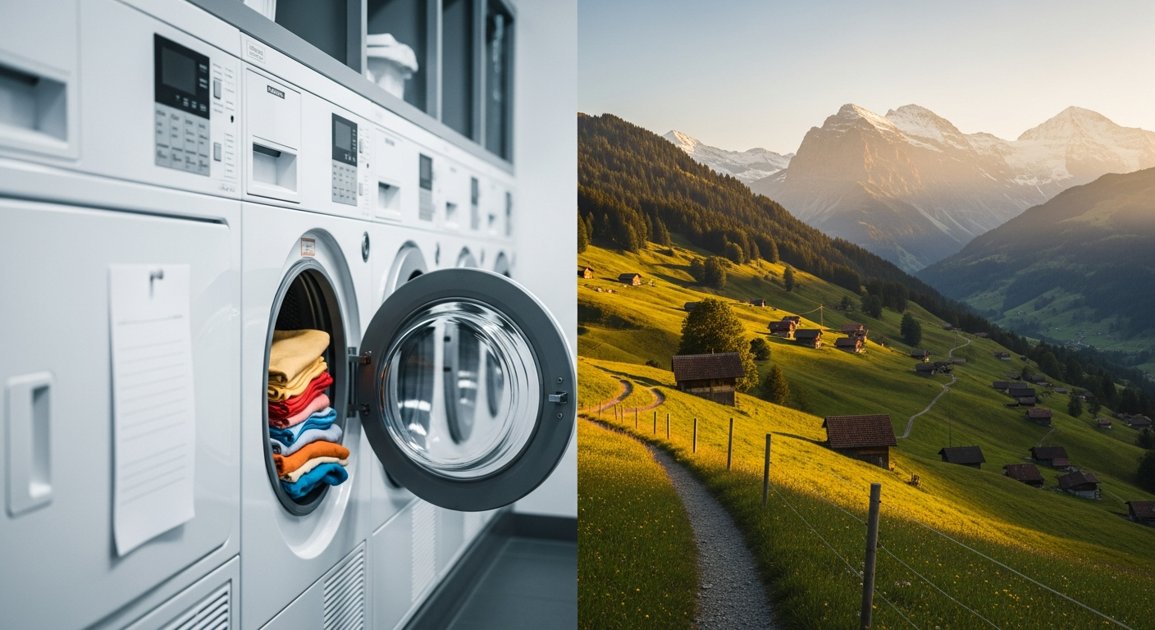
In many Swiss apartment buildings, residents share a communal Waschküche (laundry room). This space is frequently the site of 'laundry wars' if the rules are not strictly followed. The system is designed for maximum efficiency in a country with limited space.
How to Navigate the Washing Schedule
- Respect the Slot: You will likely be assigned specific days or times on a Waschplan. Using the machines outside your slot is a major breach of etiquette.
- The Cleaning Mandate: After your session, you are expected to clean the lint filters, wipe down the machines, and mop the floor. Leaving a single stray sock or a soap smudge can lead to formal complaints.
- Drying Etiquette: Only use the allocated hanging space for your specific time window. Do not leave clothes to dry into the next person's scheduled slot.
Waste Management as a Social Duty
Waste disposal in Switzerland is a precision task. It is not about simply 'throwing things away'; it is about systematic sorting. Failure to comply is often met with fines, as 'garbage detectives' in some municipalities are authorized to open non-compliant bags to find the owner.
Step-by-Step Recycling Integration
- Purchase 'Official' Bags: Most cantons require the use of prepaid, taxed garbage bags (e.g., Züri-Sack in Zurich). Using standard black bags is illegal.
- Sort by Material: Paper and cardboard must be bundled with twine (not tape) and placed on the curb only on specific collection days.
- Dispose of Glass and Aluminum: These must be taken to local collection points, but strictly within allowed hours (never on Sundays or at night).
Plan Your Move with Precision
Navigating the complexities of Swiss regulations requires localized knowledge and data. The NewLife.Help comparison tool simplifies this process by aggregating essential relocation data, allowing you to generate a personalized report tailored to your specific destination and family needs. This ensures you understand the local ordinances and social expectations before you even arrive. Start Your Free Relocation Analysis
Conclusion
Integration in Switzerland is measured by your ability to contribute to the local harmony. While the rules regarding laundry and noise may seem rigid at first, they are the foundation of the high quality of life that consistently ranks Swiss cities at the top of global indices. By observing 'Ruhezeit' and following communal protocols, you demonstrate respect for your neighbors, facilitating a smoother and more respected transition into Swiss society.