The Suburban Trade-Off: A Strategic Guide to Family Life in the Canadian Greenbelt vs. the Tokyo Kanto Plain
Introduction: Two Worlds, One Dream of Home
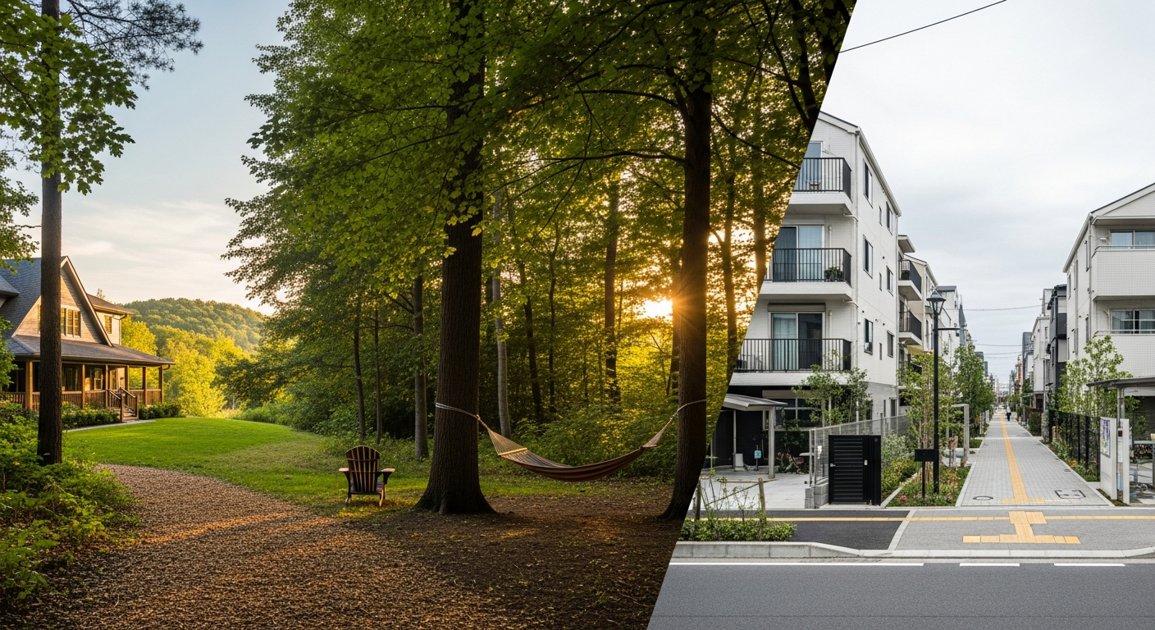
For many families, the suburban dream is the ultimate goal: a safe neighborhood, good schools, and a sense of community. However, the definition of 'suburbia' varies wildly depending on which side of the Pacific you land on. On one hand, you have the Canadian Greenbelt—a vast, protected area of greenery surrounding major hubs like Toronto, characterized by wide-open spaces and car-dependent cul-de-sacs. On the other, the Tokyo Kanto Plain offers a masterclass in transit-oriented development, where residential life revolves around the hum of the world’s most efficient railway networks.
Choosing between these two lifestyles isn’t just about choosing a house; it’s about choosing how you spend your time. This guide breaks down the strategic trade-offs between the sprawling Canadian Greenbelt and the rail-integrated hubs of the Kanto Plain to help you decide which scale of community fits your family’s future.
The Canadian Greenbelt: The Luxury of Space and the Cost of Distance
The Canadian Greenbelt (most notably in Ontario) was designed to curb urban sprawl and protect farmland. For families, this translates to a lifestyle defined by nature and privacy, but it comes with a logistical caveat.
Key Features of Greenbelt Living:
- Generous Square Footage: Houses are typically detached with multiple bedrooms, large basements, and private backyards—ideal for growing families.
- Nature at Your Doorstep: Easy access to hiking trails, conservation areas, and seasonal outdoor activities like skiing or apple picking.
- Car Dependency: Daily life—from grocery shopping to school drop-offs—almost exclusively requires a vehicle. Commutes to the city core can range from 60 to 90 minutes during peak hours.
The trade-off here is clear: you gain a private sanctuary and massive 'elbow room,' but you sacrifice significant time to the 'commuter crawl' and the maintenance costs of a large property and multiple vehicles.
The Tokyo Kanto Plain: Connectivity as a Way of Life
The Kanto Plain, encompassing Tokyo, Saitama, Chiba, and Kanagawa, operates on a completely different logic. Here, the 'suburb' is a high-density, rail-integrated hub where the train station serves as the heart of the community.
Key Features of Kanto Suburban Living:
- Rail-Integrated Convenience: Most homes are within a 10-15 minute walk or a short bicycle ride to a station. These stations are often paired with 'depachika' (department store basements) full of fresh food and services.
- Safety and Autonomy: Japan’s suburban design allows children as young as six to walk to school independently, fostering a unique sense of freedom and community safety.
- Compact Efficiency: While homes (often 'LDK' layouts) are smaller than Canadian counterparts, they are marvels of modern engineering, featuring high-tech amenities and hyper-efficient use of space.
In the Kanto Plain, the trade-off is space. You may not have a massive backyard, but the entire city becomes your playground, accessible via a 30-minute train ride that is punctual to the second.
Strategic Advice: How to Choose Your Ideal Scale
Deciding between these two environments requires an honest assessment of your family's daily rhythm. Follow these steps to evaluate your priorities:
Step-by-Step Evaluation for Families:
- Calculate Your 'Time Tax': Estimate the hours spent driving in Canada versus the 'passive' time spent on a Japanese train (where you can read, work, or rest).
- Assess Physical Activity: Greenbelt living often requires scheduled exercise, whereas Kanto living involves 'incidental' exercise through walking and cycling as part of the daily commute.
- Define 'Privacy' vs. 'Vibrancy': Do you prefer a quiet evening on a private deck, or the convenience of being able to walk to a world-class ramen shop or a 24-hour convenience store in five minutes?
- Budget for 'Hidden' Costs: Compare Canadian property taxes and gas prices against Japanese 'management fees' (for apartments) and the higher cost of fresh fruit and produce.
Plan Your Move with Precision
Navigating an international relocation involves more than just picking a destination; it requires a deep dive into the data that affects your quality of life. The NewLife.Help comparison tool is designed to simplify this complexity. By inputting your family’s specific needs—from school proximity to commute tolerance—our tool generates a personalized relocation report in seconds, comparing cost-of-living, transit metrics, and housing value between the Canadian Greenbelt and the Kanto Plain. Start Your Free Relocation Analysis
Conclusion
Whether you find solace in the sprawling landscapes of the Canadian Greenbelt or energy in the rhythmic pulse of the Tokyo Kanto Plain, both regions offer world-class standards of living. The 'right' choice depends on whether you value the expansive privacy of the West or the hyper-connected convenience of the East. By understanding these suburban trade-offs, you can stop dreaming about a move and start planning a lifestyle that truly serves your family’s goals.