The Seamless Transit Synchronicity: A Strategic Guide to Transitioning from North American Car-Dependency to the Multi-Modal Micro-Mobility Networks of Northern Europe
The Seamless Transit Synchronicity: A Strategic Guide to Transitioning from North American Car-Dependency to the Multi-Modal Micro-Mobility Networks of Northern Europe
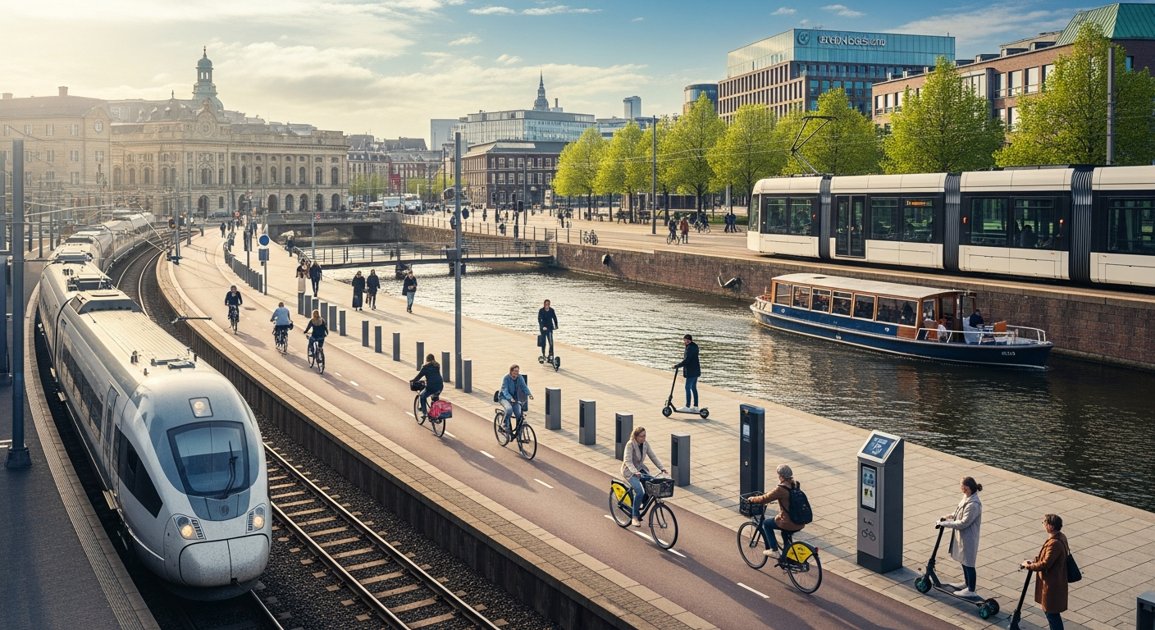
Imagine swapping your morning gridlock on a ten-lane North American freeway for the rhythmic whir of a cycle path through the heart of Copenhagen or the historic canals of Amsterdam. For many expats, the prospect of living without a car feels like losing a limb. In North America, the car is often a prerequisite for participation in society. However, in Northern Europe, the paradigm shifts from 'car-dependency' to 'transit synchronicity'—a state where e-bikes, cargo cycles, and world-class rail networks integrate so seamlessly that the personal automobile becomes an expensive burden rather than a tool for freedom.
The Math of Micro-Mobility: Car Ownership vs. The European Model
In the United States and Canada, the average annual cost of owning a new car has climbed past $10,000 when factoring in depreciation, fuel, insurance, and maintenance. In cities like Amsterdam or Copenhagen, the financial landscape is radically different due to high vehicle registration taxes and parking fees designed to discourage congestion.
Comparing the Costs
- The North American Car: $800–$1,200/month (Insurance, fuel, lease/loan, maintenance).
- The Northern European Multi-Modal Fleet: $150–$300/month. This typically includes a high-end e-bike lease, a monthly 'MaaS' (Mobility as a Service) pass for trains and trams, and occasional car-sharing for weekend trips.
By ditching the car, a family of four can often save upwards of $8,000 per year—capital that can be redirected toward higher-quality housing or travel experiences across the continent.
Building Your New Fleet: From E-Bikes to Cargo Cycles
When you move to Northern Europe, your garage won't be empty; it will just look different. The 'Multi-Modal Micro-Mobility' model relies on selecting the right tools for different tasks.
- The Commuter E-Bike: Ideal for distances up to 15km. High-speed 'pedelecs' allow you to arrive at work without breaking a sweat, utilizing grade-separated bike highways that prioritize cyclists over cars.
- The Cargo Cycle (The 'Bakfiets'): This is the true replacement for the SUV. Brands like Urban Arrow or Babboe allow you to transport two children, a week's worth of groceries, or even a medium-sized dog with ease and stability.
- Integrated Transit Passes: Systems like the OV-chipkaart in the Netherlands or Rejsekort in Denmark provide a single point of access for buses, ferries, metros, and national rail, often with 'cap' pricing that prevents you from overspending.
Infrastructure Safety: Why It Works
The primary barrier to cycling in North America is safety. In Northern European hubs, safety is 'baked in' to the urban fabric. Through a philosophy known as 'Sustainable Safety,' cities utilize physical barriers to separate heavy transit from light mobility. You aren't 'braving' traffic; you are operating in a protected network designed specifically for your vehicle's scale.
4 Steps to a Seamless Transition
Transitioning from a car-centric lifestyle requires a strategic approach. Follow these steps to ensure a smooth move:
- 1. Conduct a Commute Audit: Before choosing your neighborhood, use local transit apps like 9292 (NL) or Rejseplanen (DK) to see how your potential home connects to work and schools via bike and rail.
- 2. Invest in Quality Gear: Don't skimp on your primary vehicle. A high-quality mid-drive e-bike with integrated lights and mudguards is essential for the Northern European climate.
- 3. Embrace the 'Intermodal' Mindset: Learn to combine modes. Cycle to the station, park in a massive underground bike garage, and take a high-speed train to the next city.
- 4. Join a Car-Sharing Service: For those rare moments when you need to move furniture or head into the deep countryside, services like Greenwheels or Share Now provide on-demand vehicle access without the overhead of ownership.
Plan Your Move with Precision
Navigating the financial and logistical shifts of an international move can be overwhelming, but you don't have to do it alone. The NewLife.Help comparison tool is designed to simplify your transition by providing a personalized relocation report in seconds. By analyzing cost-of-living data, transit accessibility, and infrastructure safety scores, we help you choose the perfect neighborhood to start your car-free life. Start Your Free Relocation Analysis
Conclusion
The transition from North American car-dependency to Northern European micro-mobility is more than just a change in transportation; it is an upgrade in quality of life. By embracing transit synchronicity, you reclaim your time, improve your physical health, and contribute to a more sustainable urban future. The road ahead is best traveled on two wheels.