The Neighbourhood Architecture Pivot: A Strategic Guide to Transitioning from Canadian Suburban Subdivisions to Portugal’s Historic Freguesias and Bairro Communities
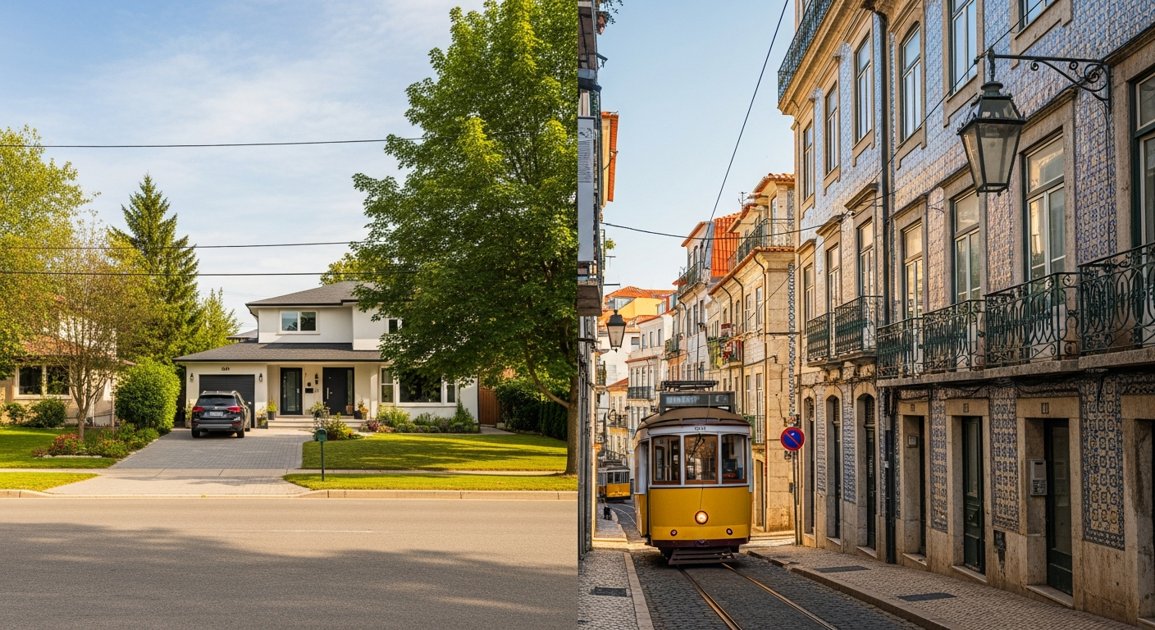
The Neighbourhood Architecture Pivot: From Canadian Suburbs to Portuguese Bairros
For many Canadians, the dream of homeownership is often realized in the form of a detached house on a quiet cul-de-sac, where the hum of the highway is a distant background noise and the nearest grocery store is a ten-minute drive away. This is the suburban subdivision: a triumph of privacy and car-centric planning. But for those looking toward the sun-drenched horizons of Portugal, a profound shift awaits. Moving to Portugal isn’t just a change in latitude; it is a fundamental 'architecture pivot' from the isolated luxury of the Canadian suburb to the hyper-connected, ancient social fabric of the Portuguese Freguesia.
Understanding the Freguesia: More Than Just a Zip Code
In Canada, municipal governance often feels distant, managed from a city hall that oversees hundreds of thousands of people. Portugal operates on a different scale. The country is divided into freguesias (civil parishes), which act as the smallest administrative unit. Your Junta de Freguesia isn't just a bureaucratic office; it is the heart of the community, responsible for local parks, social events, and even certifying your residence.
- Canadian Subdivision: Focuses on private property, large backyards, and high fences.
- Portuguese Bairro: Focuses on the 'Third Place'—the shared squares, local kiosks, and communal markets where life happens outside the home.
The Walkability Quotient: Trading Car Keys for Walking Shoes
The most jarring—and ultimately rewarding—part of this transition is the end of car dependency. In a Canadian suburb, the car is an extension of the body; without it, you are stranded. In a Portuguese Bairro (neighborhood), your legs are your primary mode of transport. The '15-minute city' isn't a futuristic concept here; it’s a centuries-old reality.
Strategic Steps for a Successful Neighbourhood Pivot
Transitioning from a sprawling layout to a dense urban center requires a tactical approach. Here is how to navigate the shift:
- Research the Junta: Before picking a neighborhood, look into the local Junta de Freguesia. Are they active in organizing community festivals? Do they maintain the local gardens? This will dictate your social life.
- Audit Your Daily Needs: In Canada, you likely 'stock up' once a week. In Portugal, you will likely shop daily. Ensure your chosen area has a Mercado Municipal (fresh market) within a 10-minute walk.
- Assess the 'Soundscape': Suburban Canada is silent. Portuguese historic centers are vibrant. Visit your potential neighborhood at 10:00 AM, 4:00 PM, and 10:00 PM to understand the rhythm of local life and street noise.
- Prioritize Transit Proximity: Even if you plan to walk, ensure you are near a Metro station or a key Carris bus line to maintain mobility across the wider city without needing a vehicle.
The Social Contract: From Fences to Plazas
In Canada, privacy is the ultimate commodity. In Portugal, social visibility is the currency of safety and belonging. You will quickly find that the 'neighbourhood watch' isn't a sign on a pole; it’s the group of elderly residents chatting on a bench or the café owner who knows exactly how you take your galão. Embracing this shift means trading the isolation of a private backyard for the communal energy of the praça (plaza).
Plan Your Move with Precision
Navigating the transition from Canadian suburban life to the intricate social structures of Portugal requires more than just a map; it requires a data-driven strategy. The NewLife.Help comparison tool is designed to bridge this gap, offering a personalized relocation report that compares your current lifestyle with potential Portuguese communities in seconds. Get insights on cost of living, walkability scores, and administrative requirements tailored specifically to your family's needs. Start Your Free Relocation Analysis
Conclusion
The pivot from a Canadian subdivision to a Portuguese freguesia is a journey from the private to the public, and from the car to the cobblestone. While the loss of a three-car garage might feel significant at first, what you gain in return is a sense of belonging that is woven into the very architecture of your surroundings. By understanding the administrative power of the parish and the social power of the plaza, you can transform your relocation into a rewarding lifestyle evolution.