How to Set Up Your Household and Utilities in Croatia 2026
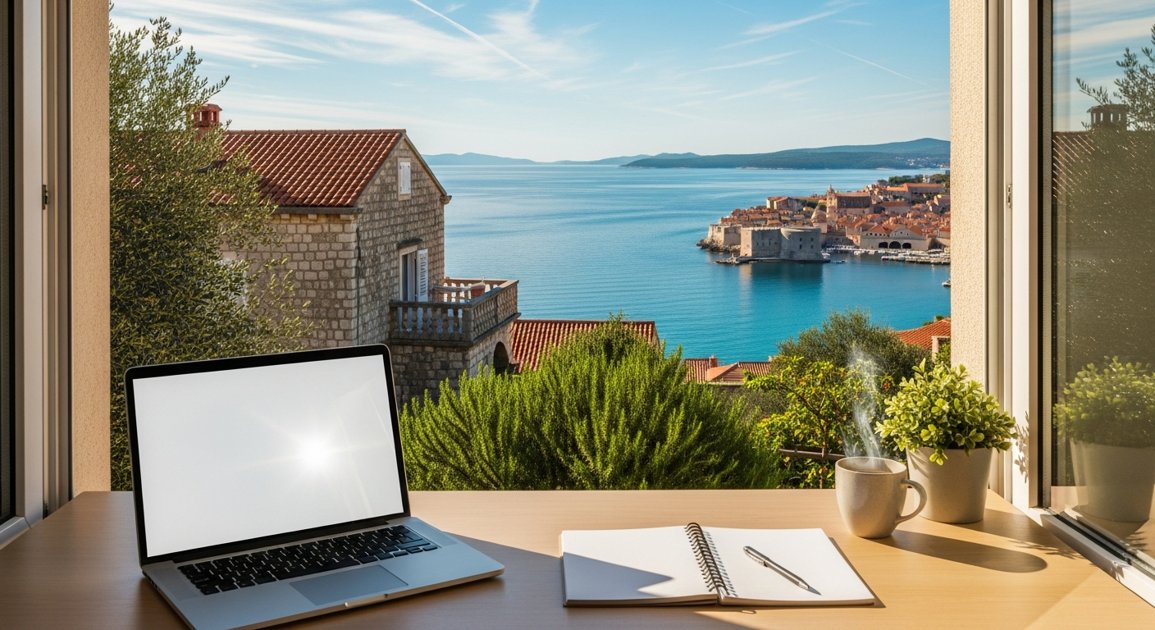
Establishing Your Base in the Mediterranean
Croatia has become one of Europe’s most sought-after destinations for digital nomads and long-term expats, yet the bureaucratic reality of establishing a home requires precise navigation. Success in setting up utilities in Croatia hinges on the possession of a Personal Identification Number (OIB) and a legally notarized rental agreement. While the digital infrastructure has improved significantly leading into 2026, the process remains grounded in specific administrative steps that must be followed to avoid service delays or legal complications. Understanding the landscape of providers, payment cycles, and the unique dual-tariff system for electricity is essential for any newcomer aiming to manage their household costs effectively.
The Foundation: OIB and Your Rental Contract
Before you can sign a single contract with a service provider, you must obtain your OIB (Osobni identifikacijski broj). This eleven-digit number serves as your tax ID and is the universal key for all administrative tasks in the country. You can obtain this at the local Tax Office (Porezna uprava) by presenting your passport and a completed application form.
Once you have your OIB, the next critical document is your rental contract (Ugovor o najmu). For utility transfers, providers usually require a signed "Primopredajni zapisnik" (Handover Record). This document records the exact meter readings for electricity, water, and gas on the day you take possession of the property. Without this record, you may find yourself liable for the previous tenant's consumption.
A Step-by-Step Guide to Setting Up Your Utilities in Croatia
Managing utility transfers in Croatia is often a shared responsibility between the landlord and the tenant. In most long-term rental scenarios, the utility accounts remain in the landlord’s name, and the tenant pays the bills as they arrive. However, many expats prefer to have the bills transferred to their own name for proof of residence. Here is the process for the primary services.
1. Electricity (Struja)
The primary provider in Croatia is HEP (Hrvatska elektroprivreda), though the market is liberalized, allowing for private competitors like E.ON. Most residential properties use a two-rate (dual-tariff) meter system.
- High Tariff (VT): Higher rates applied during the day (typically 07:00 to 21:00 in winter, and 08:00 to 22:00 in summer).
- Low Tariff (NT): Significantly cheaper rates applied during the night and on Sundays.
To set up or transfer electricity, you must visit the local HEP office or use their online portal, "HEP Moja Mreža." You will need your OIB, ID, and the latest meter reading. In 2026, most households are equipped with smart meters that transmit readings automatically, but manual verification is still recommended during the initial setup.
2. Water (Voda)
Water services are managed by municipal companies. In Zagreb, this is Vodoopskrba i odvodnja; in Split, it is Vodovod i kanalizacija. If you are moving into an apartment building (zgrada), the water bill is often calculated based on the number of occupants in the building rather than individual meters. This is managed by the building representative (Predstavnik stanara). You must inform the representative of how many people will be living in the unit to ensure the billing is accurate.
3. Natural Gas and Heating
Heating in Croatia varies by region and building type. Coastal regions often rely on electricity (air conditioning units) or wood pellets, while continental Croatia, including Zagreb, uses natural gas or a centralized district heating system (HEP Toplinarstvo). If your home uses gas for cooking and heating, the account must be updated at the local gas distribution office (Opskrba plinom).
Cost Expectations for Setting Up Your Utilities in Croatia in 2026
Budgeting for a household in Croatia requires an understanding of seasonal fluctuations. Heating costs in the winter months in the north can be substantial, while cooling costs in the south peak in July and August. Below is a breakdown of estimated monthly costs for a standard two-bedroom apartment (approx. 70m²) for a family of two.
| Service | Average Monthly Cost (Winter) | Average Monthly Cost (Summer) |
|---|---|---|
| Electricity | €60 - €90 | €70 - €110 (with AC) |
| Water | €20 - €30 | €20 - €30 |
| Heating (Gas/District) | €80 - €150 | €10 - €20 (Base fee) |
| Waste Management | €10 - €15 | €10 - €15 |
| Internet (Fiber) | €25 - €40 | €25 - €40 |
High-Speed Internet and Telecommunications
Croatia has seen aggressive investment in fiber-optic infrastructure. In 2026, fiber (optika) is available in most urban centers and is expanding into suburban areas. The main providers are Hrvatski Telekom (HT), A1 Croatia, and Telemach.
Choosing a Provider
When selecting an internet provider, do not rely solely on the advertised speeds. Check the specific availability for your address. Contracts are typically signed for 24 months to receive the best rates, though "no-contract" options exist at a higher monthly premium. For expats, the "Magenta" bundles from HT or A1’s multi-service discounts often provide the best value by combining mobile lines with home internet.
Installation Process
Installation usually takes between 7 to 14 days from the date of the request. You will need to provide your OIB and a copy of your rental agreement. In many cases, the technician will require access to the building’s basement or communications closet, so ensure you have coordinated this with the building manager beforehand.
Waste Management and Environmental Taxes
Waste collection in Croatia is strictly regulated by local municipalities. In cities like Zagreb, a "pay-as-you-throw" system is in effect. Residents must purchase specific branded trash bags (ZG Vrećice) from local supermarkets for general waste. Recyclables (paper, plastic, bio-waste, and glass) are collected for free in designated bins.
Failure to sort waste correctly can result in significant fines for the entire apartment building. Ensure you understand the local collection schedule, which is usually posted in the building’s common area or available on the municipal waste company's website (e.g., Čistoća).
The HRT Pristojba (TV and Radio Tax)
One utility that often surprises expats is the mandatory HRT fee. By law, every household in Croatia that owns a device capable of receiving radio or television signals (including computers and smartphones) must pay a monthly fee to the national broadcaster, Hrvatska radiotelevizija (HRT). In 2026, this fee remains approximately €10.62 per month. Inspectors occasionally visit homes to verify the existence of receivers; if you do not have a TV, you may still be liable if you have a car radio or an internet-connected device.
Methods of Payment: Digital and Physical
Utility bills (uplatnice) usually arrive in your mailbox during the first two weeks of the month. Croatia uses a 2D barcode system (HUB-3 form) that makes payments highly efficient. You have several options for payment:
- Mobile Banking: This is the most efficient method. Simply scan the barcode on the bill using your Croatian bank’s app to populate all payment details.
- Tisak Kiosks and Supermarkets: You can pay bills at any Tisak kiosk or Konzum supermarket for a small processing fee.
- KEKS Pay: A popular local app that allows you to receive and pay many utility bills digitally, bypassing the paper mail system entirely.
- Direct Debit (Trajni nalog): This can be set up for recurring bills like electricity and internet once you have a local bank account.
- Post Office (Hrvatska pošta): Bills can be paid at any post office window, though wait times can be long.
Frequently Asked Questions
Can I set up utilities before I arrive in Croatia?
Generally, no. You must have an OIB and a signed rental contract or proof of ownership to initiate utility transfers. Most providers require a physical presence or a power of attorney (punomoć) to sign the necessary documents. You can, however, research providers and check fiber availability online before your arrival.
What happens if I don't pay my utility bills on time?
Croatian utility companies are relatively quick to issue reminders. If a bill remains unpaid for more than 30 to 60 days, you will receive a formal warning (opomena). Continued non-payment will lead to the service being disconnected and the debt being sent to a lawyer or a private enforcement office (Fina), which can result in your bank account being frozen.
Are utility bills included in the rent?
In Croatia, the standard practice is that rent (najam) and utilities (režije) are separate. Some "all-inclusive" arrangements exist for short-term rentals or digital nomad housing, but for a standard one-year lease, you should expect to pay for utilities based on actual consumption in addition to your monthly rent.
Do utility providers have English-speaking customer service?
Major telecommunications companies like HT and A1 usually have English-speaking staff in their physical stores and call centers. Municipal water and waste companies, however, may have limited English support. It is often helpful to have a local friend or a relocation consultant assist with the initial setup or any complex billing disputes.
What is the 'Komunalna naknada'?
This is a communal fee paid to the city for the maintenance of local infrastructure, including street lighting and road repairs. It is typically billed quarterly or monthly and is usually the responsibility of the tenant, though this should be clarified in your rental agreement.
Finalizing Your Household Operations
Successfully setting up utilities in Croatia is a milestone in the relocation process that transitions you from a visitor to a resident. While the administrative steps require diligence, the system is reliable and increasingly digitized. By ensuring your OIB is ready, documenting your meter readings upon entry, and utilizing mobile banking for monthly payments, you can maintain an efficient household. Prioritizing the transfer of electricity and internet within your first week will ensure your home is fully functional, allowing you to focus on the cultural and lifestyle benefits of living in Croatia. Keep all receipts and contracts in a dedicated file, as these documents are often required when renewing your residence permit or proving your address for other legal purposes.