The Joie de Vivre Pivot: A Comparative Guide to Social Etiquette, Work-Life Balance, and Daily Rituals in Canada vs. France
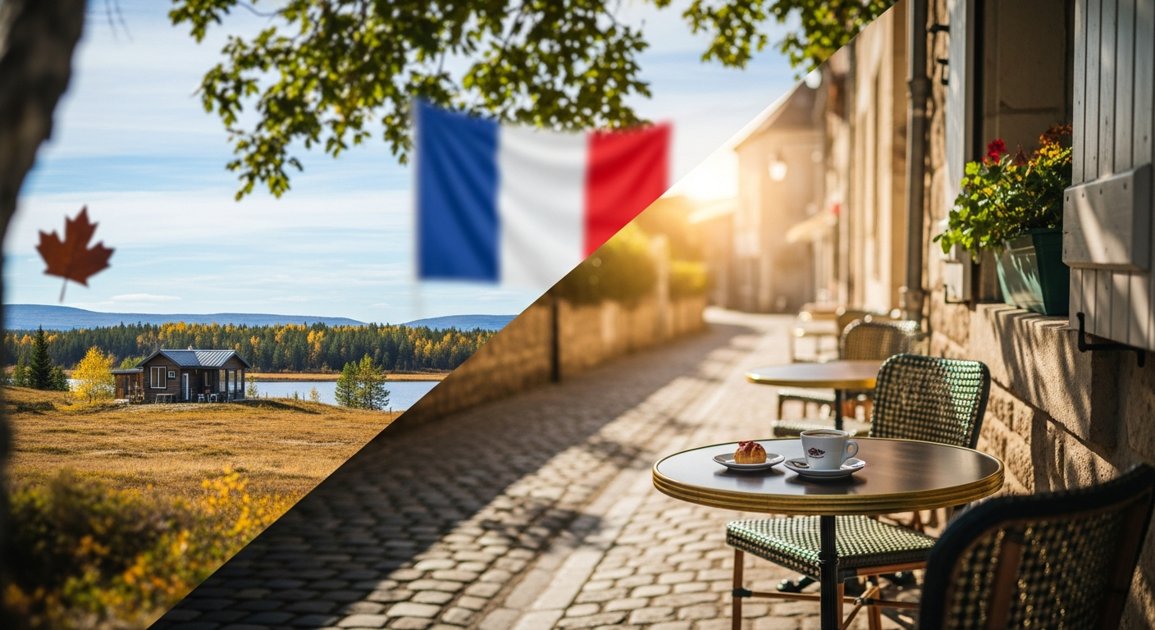
For many Canadians, the dream of moving to France is painted in the golden hues of a Provençal sunset or the chic allure of a Parisian boulevard. However, the transition from the Great White North to the Hexagon involves more than just swapping maple syrup for macarons. It requires a fundamental shift in mindset—a "Joie de Vivre Pivot." While Canada is known for its polite efficiency and North American work ethic, France operates on a different rhythm, where leisure is a right and social interactions are governed by centuries-old codes of conduct.
The Social Script: Beyond "Please" and "Thank You"
In Canada, politeness is often synonymous with being easy-going and approachable. In France, politeness is a structured ritual. For a Canadian expat, failing to understand these unwritten rules can lead to the perception of being mal élevé (rude).
The Power of "Bonjour"
In Canada, you might walk into a shop, find what you need, and head to the counter. In France, this is a social faux pas. The word "Bonjour" is the key that unlocks all doors. It is a mandatory acknowledgment of the other person's humanity. Always greet the shopkeeper, the bus driver, or the waiter before making any requests.
Navigating the "Tu" vs. "Vous" Divide
Canadians tend to move to a first-name basis quickly. In France, the formal vous is the default for anyone you don't know well. Using tu too early can be seen as overly familiar or even disrespectful. When in doubt, stick to vous until explicitly invited to do otherwise.
Reimagining the Grind: Work-Life Balance
The Canadian professional landscape is heavily influenced by the 9-to-5 (or 8-to-6) North American hustle. France, however, has codified its commitment to leisure into law, most notably with the 35-hour work week.
- The Sacred Lunch Break: Forget the "desk salad." In France, lunch is a dedicated time to disconnect. Many businesses close for two hours, and employees often enjoy a sit-down meal away from their computers.
- The Right to Disconnect: France pioneered laws that protect employees from checking emails after work hours. Respecting boundaries is not seen as a lack of ambition, but as a mark of professionalism.
- Vacation as a Virtue: While Canadians might feel guilty taking their full two weeks, the French take their five weeks of annual leave—often all at once in August—with pride.
Daily Rituals: Slowing Down the Clock
Adjusting to daily life in France means embracing a slower, more intentional pace. Productivity is measured differently here; it’s about the quality of the experience rather than the volume of tasks completed.
The Bakery Run
In Canada, bread is often a weekly grocery item. In France, the daily trip to the boulangerie for a fresh baguette is a cornerstone of life. It’s a moment to engage with the neighborhood and ensure the highest quality for the evening meal.
Sunday Closures
Canadians are used to 24/7 convenience. In France, Sundays are still largely reserved for family and rest. Most supermarkets and shops close by midday or stay shut entirely. Learning to plan your week around this "forced" slowdown is a vital part of the pivot.
Step-by-Step: How to Navigate the Transition
Ready to make the leap? Follow these steps to ensure your cultural integration is as smooth as a Bordeaux wine:
- Master the Greeting: Practice saying "Bonjour, Monsieur/Madame" with eye contact every time you enter a room or shop.
- Observe "La Bise": Learn the local custom for cheek-kissing. It varies by region (usually two to four kisses), but it is the standard greeting among friends and acquaintances.
- Reclaim Your Evenings: Stop checking work notifications after 6:00 PM. Use that time to explore a local café or cook a multi-course meal.
- Accept the Bureaucracy: French administrative tasks take time. Instead of fighting the pace, expect the paperwork and view it as part of the cultural experience.
Plan Your Move with Precision
Transitioning between two distinct cultures like Canada and France requires more than just a passport; it requires data-driven insights. The NewLife.Help comparison tool is designed to take the guesswork out of your relocation. By analyzing cost of living, healthcare quality, and cultural nuances specific to your profile, NewLife.Help provides a personalized relocation report in seconds, helping you move with total confidence. Start Your Free Relocation Analysis
Embracing the Joie de Vivre pivot isn't just about moving your belongings across the Atlantic; it’s about moving your perspective. By trading efficiency for elegance and the hustle for the heart, you’ll find that life in France offers a richness that no 60-hour work week could ever provide. Welcome to your new life—bienvenue en France.