The Academic Rhythm Pivot: A Strategic Guide to Transitioning from Australia’s Semester Models to Portugal’s European Credit Transfer System (ECTS) and Oral Examination Culture
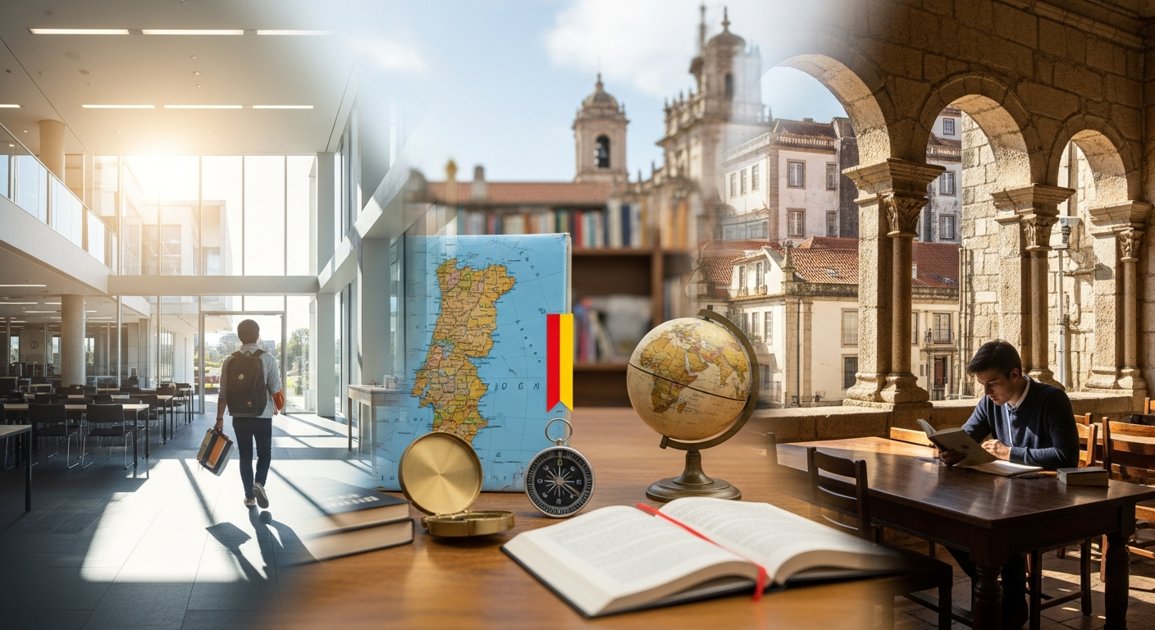
The Academic Rhythm Pivot: Navigating the Shift from Australia to Portugal
Swapping the sun-drenched campuses of Sydney or Melbourne for the historic cobblestones of Coimbra or Lisbon is a dream for many Australian students. However, the transition involves more than just a change in hemisphere; it requires a fundamental recalibration of your academic DNA. Moving from Australia’s familiar semester models to Portugal’s rigorous European Credit Transfer System (ECTS) and its legendary oral examination culture is a strategic maneuver that demands preparation.
Decoding the Credits: From Australian Units to ECTS
In Australia, most universities operate on a system where a full-time load is 48 credit points per year (typically four units per semester). Portugal, as part of the Bologna Process, utilizes the ECTS, which standardizes the workload across Europe. Understanding the mathematical shift is your first step toward a successful transfer.
Credit Equivalency at a Glance
- The Workload: 1 ECTS credit represents approximately 25–30 hours of study. A standard full-time year in Portugal is 60 ECTS.
- The Conversion: While specific agreements vary between institutions, the general rule of thumb is that 1 Australian Credit Point is roughly equivalent to 1.25 ECTS credits.
- The Course Load: Expect to take 5 to 7 subjects per semester in Portugal to meet the 30 ECTS requirement, a significant jump from the standard Australian 4-subject model.
The Semester Shuffle: Adjusting Your Biological and Academic Clock
The Australian academic year (February to November) is the inverse of the Portuguese calendar. In Portugal, the first semester typically runs from mid-September to late January, with the second semester spanning February to June. This shift means Australian students often face a 'gap' or a 'double-up' semester during their relocation.
Navigating the Portuguese Assessment Cycle
Assessment in Portugal is often weighted heavily toward end-of-semester exams. Unlike the Australian model of consistent 'low-stakes' quizzes and assignments, Portuguese professors may place 70% to 100% of your grade on a single final assessment. There are typically two exam periods: the Época Normal (Regular Season) and the Época de Recurso (Resit Season), providing a safety net that is less common in the Australian system.
The Oral Examination Culture: A Strategic Adaptation
Perhaps the most significant 'culture shock' for Australian students is the Exame Oral. In Portugal, achieving a certain grade on a written exam often triggers a mandatory oral defense to confirm or improve your mark. This requires a level of verbal fluency and theoretical agility that isn't always emphasized in Australian undergraduate programs.
How to Master the Portuguese Oral Exam
- Prioritize Theory: Portuguese education leans heavily into the theoretical and philosophical underpinnings of a subject. Don't just learn the 'how'; master the 'why.'
- Refine Your Rhetoric: Practice explaining complex concepts aloud in a formal, academic tone. The ability to defend a thesis under direct questioning is highly valued.
- Build Relationships: Portuguese academic culture is hierarchical but values engagement. Attend office hours (horário de atendimento) to ensure the professor is familiar with your logic before you face them in an oral exam.
Step-by-Step Transition Guide
- Obtain Detailed Syllabi: Before leaving Australia, secure 'Learning Outcomes' and 'Syllabus Descriptions' for every unit completed. Portugal’s Direção-Geral do Ensino Superior (DGES) requires these for credit recognition.
- Calculate Your Buffer: Due to the higher number of subjects in Portugal, ensure your visa and financial planning account for a potentially longer degree duration if credits don't transfer 1:1.
- Bridge the Language Gap: Even if your course is in English, oral examinations often involve nuances that are better navigated with at least B1-level Portuguese.
Plan Your Move with Precision
Transitioning your academic life across continents is a complex puzzle with many moving parts. The NewLife.Help comparison tool simplifies this process by providing a personalized relocation report in seconds, comparing everything from cost of living to specific academic benchmarks between Australia and Portugal. Start Your Free Relocation Analysis
Conclusion
The shift from the Australian academic rhythm to the Portuguese system is a pivot that offers immense rewards. By mastering the ECTS workload and embracing the rigors of oral examinations, you aren't just earning a degree; you are developing a European intellectual flexibility that is highly prized in the global job market. With the right data and a strategic mindset, your move to Portugal can be as academically successful as it is culturally enriching.