How to Secure Your 2026 Mauritius Residency Without a Local Job
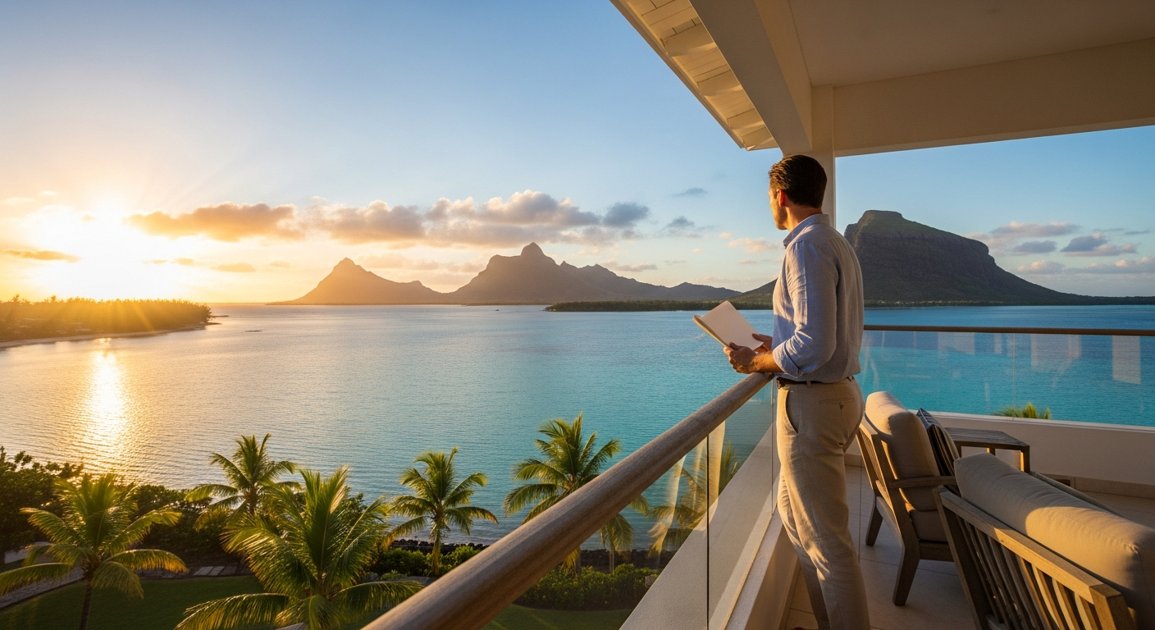
Mauritius has transitioned from a sugar-dependent economy to a sophisticated financial services and technology hub, making it one of the most stable jurisdictions in the Indian Ocean for foreign professionals. For those looking to secure mauritius residency for remote workers 2026, the government has streamlined several pathways that do not require a local employment contract. Instead, the focus has shifted toward attracting high-net-worth individuals, digital nomads, and entrepreneurs who contribute to the local economy through external income and investment. By 2026, the digital infrastructure and residency frameworks are expected to be even more robust, favoring those who can demonstrate financial independence and a clear professional focus.
Understanding the Two Primary Pathways for Non-Local Workers
To reside in Mauritius without a local job, you generally choose between two distinct legal frameworks: the Premium Visa and the Occupation Permit (OP) for Self-Employed individuals. Each serves a different profile of worker and carries specific long-term implications for your stay and tax residency status.
- The Premium Visa: Best for those who want to test the waters. It is valid for one year and is renewable. You cannot enter the local labor market, and your source of income must remain outside Mauritius.
- The Self-Employed Occupation Permit: A long-term residency solution valid for 10 years. It requires an initial investment and is designed for freelancers or consultants who wish to establish their own one-person business entity on the island.
Comparing Routes for Mauritius Residency for Remote Workers 2026
Choosing between these two options depends on your intended length of stay and your willingness to commit capital. The following table breaks down the core differences between the Premium Visa and the Self-Employed Occupation Permit.
| Feature | Premium Visa | Self-Employed Occupation Permit |
|---|---|---|
| Validity | 1 Year (Renewable) | 10 Years (Renewable) |
| Initial Investment | None | USD 35,000 |
| Income Source | Must be outside Mauritius | Can be local or international |
| Minimum Monthly Income | Approx. USD 1,500 | Varies (see below) |
| Processing Time | 48 hours to 2 weeks | 2 to 3 months |
The Premium Visa: The Entry-Level Remote Work Solution
The Premium Visa remains the most accessible option for individuals looking for mauritius residency for remote workers 2026. This visa was introduced to accommodate the surge in digital nomadism. It allows you to live on the island while maintaining your current employment or business based elsewhere in the world.
Eligibility Requirements
To qualify, you must prove that your main place of business and source of income are outside Mauritius. You are not allowed to provide services to local Mauritian clients under this visa. You will need to provide evidence of your stay, such as a long-term rental agreement or a booking for the initial period of your residency.
Document Checklist for the Premium Visa
- A valid passport with at least six months validity.
- Proof of health and travel insurance for the duration of your stay.
- A certified copy of your birth certificate.
- Evidence of funds (bank statements showing a monthly income of at least USD 1,500 per person).
- A clean criminal record (Certificate of Character) from your home country.
The Self-Employed Occupation Permit: A 10-Year Commitment
If you are looking for more permanent mauritius residency for remote workers 2026, the Self-Employed Occupation Permit is the standard. This permit effectively makes you a resident of Mauritius for a decade, providing greater stability and a clearer path to permanent residency later on. This is classified as a "Professional" permit but for those working for themselves.
Financial Obligations
The primary hurdle for the Self-Employed OP is the initial transfer of funds. You must transfer USD 35,000 (or its equivalent in a freely convertible currency) into your personal Mauritian bank account. This money is yours to use for your business and living expenses; it is not a fee paid to the government, but rather an entry requirement to ensure you are self-sufficient.
Income Thresholds for Renewal
To maintain your Occupation Permit, your business activity must generate a minimum income. For the first two years, the business must generate at least 600,000 Mauritian Rupees (MUR) annually (approximately USD 13,500). From the third year onward, this requirement increases to 1,200,000 MUR annually (approximately USD 27,000). Failure to meet these thresholds can lead to the revocation of the permit.
Step-by-Step Application for Mauritius Residency for Remote Workers 2026
Applying for the Occupation Permit is a more rigorous process than the Premium Visa. Follow these steps to ensure compliance with the Economic Development Board (EDB) guidelines:
- Preparation of Business Plan: You must submit a detailed business plan outlining your services, target market, and three-year financial projections. Even if you are a freelancer with existing clients abroad, this document is mandatory.
- Online Application (NELS): All applications are submitted through the National E-Licensing System (NELS). You will upload scanned copies of your passport, birth certificate, and business plan.
- Approval in Principle: Once the EDB reviews your application, they will issue an "Approval in Principle." This allows you to travel to Mauritius to finalize the process.
- Fund Transfer: Upon arrival, you must open a local bank account and transfer the USD 35,000. You will need a bank statement or a swift transfer advice as proof.
- Medical Screening: You must undergo a medical examination at a private clinic in Mauritius. This includes blood tests for hepatitis, HIV, and a chest X-ray for tuberculosis.
- Final Appointment: You will visit the EDB offices in Port Louis for a final interview and to present your original documents. If everything is in order, your 10-year permit is usually issued within a few business days.
Taxation and Residency Status
Securing mauritius residency for remote workers 2026 brings significant tax implications. Mauritius operates on a residency-based tax system. You are considered a tax resident if you spend 183 days or more in the country during a calendar year.
Tax Rates and Incentives
The personal income tax rate in Mauritius is capped at 15%. However, under the Premium Visa, you are only taxed if you remit your income into a Mauritian bank account. If you keep your funds in an offshore account and only transfer what is needed for living expenses, your tax liability may be limited. For Occupation Permit holders, worldwide income is generally taxable in Mauritius if you are a tax resident, though the country has an extensive network of Double Taxation Avoidance Agreements (DTAA) to prevent you from being taxed twice on the same income.
Practical Logistics for 2026 Relocation
Planning for a 2026 move requires foresight regarding housing and infrastructure. While Mauritius offers a high quality of life, the logistics of a move require careful management.
Choosing a Location
Most expats gravitate toward three main areas: the North (Grand Baie/Pereybere), the West (Tamarin/Flic-en-Flac), or the center (Moka). The North offers the best amenities and nightlife, while the West is preferred by those seeking outdoor activities and a slower pace. Moka is the emerging "Smart City" and is ideal for those who prefer cooler temperatures and proximity to international schools.
Connectivity and Infrastructure
Mauritius has invested heavily in fiber-optic internet. Most residential areas have access to high-speed connections ranging from 50 Mbps to 1 Gbps. For a remote worker, this is critical. In 2026, 5G coverage is expected to be nearly universal across the island, providing a reliable backup for home internet systems.
Frequently Asked Questions
Can I bring my family on a Premium Visa or Occupation Permit?
Yes. Both residency options allow you to bring dependents, which include your spouse (including common-law partners of the opposite sex), children, and parents. Dependents of Occupation Permit holders will receive a Dependent Permit that matches the duration of the main applicant’s permit. They do not have the right to work locally unless they apply for their own separate Occupation Permit.
Is there a fee for the Premium Visa?
As of the current policy, there is no government application fee for the Premium Visa. This makes it an exceptionally low-risk entry point for those wanting to explore Mauritius. However, you should account for the costs of medical insurance and the Certificate of Character from your home country.
Can I buy property as a remote worker in Mauritius?
Foreigners are generally restricted from buying "stand-alone" land or houses but can purchase property within specific government-approved schemes, such as the Integrated Resort Scheme (IRS), Real Estate Scheme (RES), or Property Development Scheme (PDS). If you purchase a property worth more than USD 375,000, you automatically qualify for a permanent residency permit.
How long does the residency application process take?
The Premium Visa is typically processed within 48 hours to 14 days. The Occupation Permit for Self-Employed individuals takes longer due to the business plan review and the requirement for a local bank account. Expect the full OP process to take between 8 and 12 weeks from the initial submission to the issuance of the physical permit card.
What happens if my Occupation Permit is not renewed?
If you fail to meet the income thresholds or the conditions of your permit, you will be required to leave the country or switch to a different visa category. It is essential to maintain meticulous financial records and ensure your annual tax returns are filed correctly to avoid issues during the renewal process in the future.
Conclusion
Securing mauritius residency for remote workers 2026 is a realistic and structured process for those who prepare their documentation in advance. Whether you choose the flexibility of the Premium Visa or the long-term stability of the Self-Employed Occupation Permit, Mauritius offers a compelling environment for professional growth and a high standard of living. Focus on meeting the financial requirements and ensuring your business activities align with Mauritian regulations. For more detailed assistance on your specific business plan or document verification, consult with the Economic Development Board or a licensed relocation specialist to ensure a successful transition to your new base in the Indian Ocean.