How to Plan Your 2026 Move to Croatia: A Data-Driven Guide to Seasonal Rental Contracts, Utility Tiers, and the Real Cost of Year-Round Coastal Living
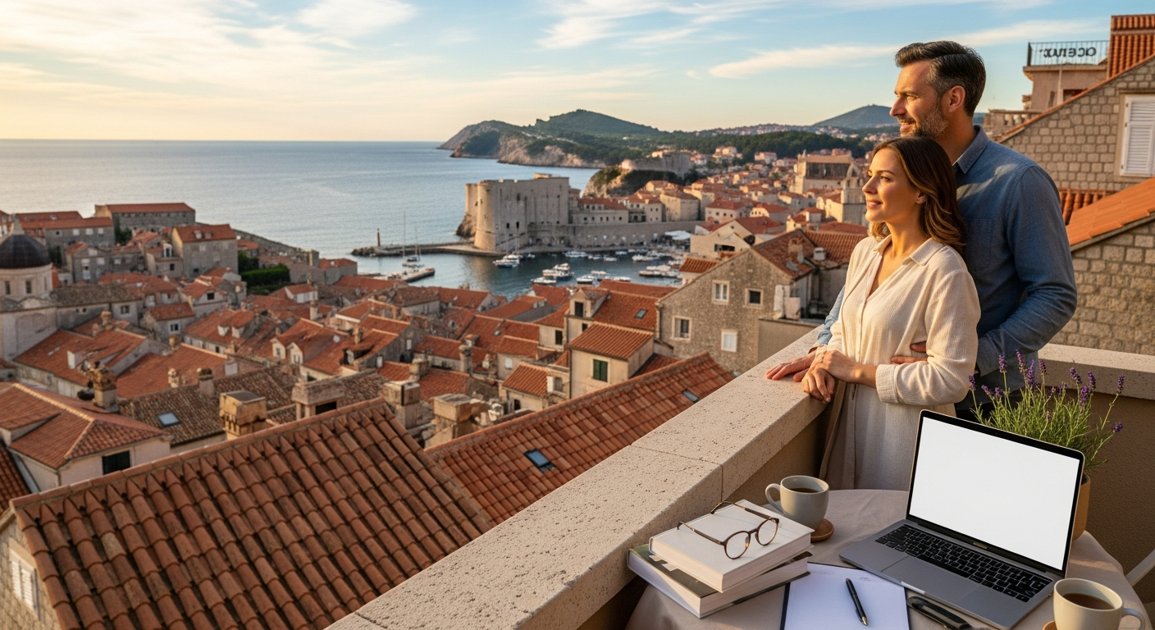
The Adriatic Reality: Why Precision Planning is Essential for 2026
By 2026, Croatia will have fully integrated into the Eurozone’s fiscal and logistical frameworks, yet the country remains a land of two distinct economic realities: the high-velocity tourist season and the quiet, resource-heavy winter. Navigating this divide requires more than a love for the Dalmatian coast; it demands a strategic approach to residency, housing contracts, and fluctuating utility structures. This moving to croatia guide 2026 is designed to provide the hard data and logistical frameworks necessary to transition from a temporary visitor to a long-term resident without falling into the common traps of the coastal rental market.
Understanding the Dual Rental Market: The "Summer Kick-Out"
The most significant hurdle for anyone moving to the coast—specifically cities like Split, Zadar, and Dubrovnik—is the seasonal nature of property availability. In the Croatian rental market, there is a distinct difference between a 'long-term' lease and a 'year-round' lease.
Navigating Seasonal Rental Contracts
Most landlords on the coast prefer the "October to June" model. Under this arrangement, tenants are expected to vacate by June 1st so the property can be listed on short-term platforms like Airbnb or Booking.com for three times the monthly rent. If you are using this moving to croatia guide 2026 to plan a permanent move, you must explicitly negotiate for a cjelogodišnji najam (year-round lease).
- Tourist Season Rates: Expect to pay a 20% to 35% premium on monthly rent if you insist on staying through July and August.
- Off-Season Advantage: Negotiating a lease that starts in November often yields lower baseline prices than starting a lease in May.
- The Notary Requirement: For a contract to be legally binding for residency purposes, it must be notarized (solemnizacija) at a local Javni bilježnik. This protects the tenant from arbitrary eviction.
Projected Rental Costs for 2026
| City | 1-Bedroom (Year-Round) | 2-Bedroom (Year-Round) | Primary Heating Source |
|---|---|---|---|
| Zagreb | €750 - €950 | €1,100 - €1,500 | Central/Gas |
| Split | €800 - €1,100 | €1,300 - €1,800 | Electric/AC |
| Rijeka | €600 - €850 | €900 - €1,200 | Central/Electric |
| Zadar | €650 - €900 | €1,000 - €1,400 | Electric/AC |
Utility Tiers and the Winter Energy Surge
Utility costs in Croatia are not flat. The national electricity provider, HEP (Hrvatska elektroprivreda), operates on a tiered system that can surprise unprepared residents during the winter months. Because many coastal apartments lack central gas heating, residents rely on air conditioning units and electric heaters, which are inefficient in stone buildings with poor insulation.
The Two-Tariff System (Dvotarifno brojilo)
Most Croatian households utilize a dual-tariff meter. Understanding these hours is essential for managing your monthly budget:
- Higher Tariff (VT): Generally from 07:00 to 21:00 (winter) or 08:00 to 22:00 (summer). This is when electricity is most expensive.
- Lower Tariff (NT): Overnight and during the weekends. Running heavy appliances like washing machines or dishwashers during these windows can reduce electricity bills by up to 40%.
In addition to electricity, communal fees (komunalna naknada) and water are often billed separately. In a standard 60-square-meter apartment, expect total utility costs to average €150 in the summer and spike to €250-€300 in the winter if the building relies solely on electric heating.
Strategic Residency Planning: The OIB and Beyond
Your moving to croatia guide 2026 checklist must begin with the OIB (Osobni identifikacijski broj). This is your personal identification number, and without it, you cannot sign a lease, open a bank account, or register for utilities. Obtaining an OIB is a straightforward process at the local tax office (Porezna uprava), but it should be done within the first 48 hours of arrival.
Residency Options for 2026
Depending on your nationality and professional status, you will likely fall into one of three categories:
- Digital Nomad Permit: Valid for up to one year for those working for companies outside of Croatia. Note that this is a stay, not a residency, and cannot be extended immediately; you must leave the country for 90 days before reapplying.
- EU Citizen Registration: Relatively simple registration at the local MUP (Ministry of the Interior) after three months of stay.
- Work Permit/Self-Employment: Requires a local contract or the opening of an Obrt (trade business). This pathway provides long-term stability and access to the HZZO (national healthcare system).
The Real Cost of Coastal Living: A Budget Breakdown
Living in Croatia in 2026 offers a high quality of life, but the "cheap Eastern Europe" era is over. Prices have stabilized to align with Mediterranean neighbors like Italy or Spain. A single professional should budget at least €2,200 per month for a comfortable lifestyle on the coast, while a family of four will require approximately €4,000 to €4,500.
Monthly Expense Estimates (Excluding Rent)
- Groceries: €400 - €600 per person. Local markets (Pazar) offer better quality but not necessarily lower prices than supermarkets like Tommy or Konzum.
- Health Insurance: Mandatory HZZO contributions for residents are approximately €100 per month, plus optional private insurance (Dopunsko) for €10 - €15.
- Transportation: A monthly public transit pass averages €40, while fuel prices remain high at roughly €1.50 - €1.70 per liter.
Essential Steps for a Successful Move
1. The Pre-Arrival Search
Do not rely solely on international portals. Use local sites like Njuškalo or Index Oglasi. While many listings are in Croatian, using a browser translator will give you access to the local-market prices rather than the inflated "expat-targeted" listings.
2. The Heating Audit
Before signing a year-round contract, verify the heating system. An apartment with "Norwegian radiators" or a wood-burning stove (peć na drva) will be significantly more cost-effective in January than one relying on a single, aging AC unit in the living room.
3. The "Terminska" Strategy
If you are moving as a family, aim to arrive in late August or early September. This allows you to secure a lease just as the tourist season ends but before the university semester begins in cities like Split or Zagreb, which creates a second surge in rental demand.
Frequently Asked Questions
Do I need to pay taxes in Croatia if I am on a Digital Nomad Permit?
As of current 2026 regulations, digital nomads are exempt from paying income tax to the Croatian government on the income earned via their nomad permit. However, you remain responsible for your tax obligations in your home country or country of tax residence.
Can I buy a car immediately upon moving?
You can purchase a car, but registering it requires a valid residency permit (boravište or prebivalište). Many expats choose to lease or use long-term rentals until their residency paperwork is finalized, as the registration process involves technical inspections and specific insurance requirements.
Is private health insurance necessary?
While the state-run HZZO is mandatory for most residents and provides decent care, many expats opt for private supplemental insurance to access faster specialist appointments and English-speaking doctors in private clinics (e.g., Croatia Poliklinika).
How difficult is the language barrier in professional settings?
In coastal cities and Zagreb, English is widely spoken among those under 50. However, dealing with the bureaucracy (birokracija) at the MUP or Tax Office often requires a basic level of Croatian or, ideally, a local translator or lawyer to ensure documents are handled correctly.
Conclusion
Relocating to Croatia in 2026 is a rewarding endeavor for those who prioritize lifestyle, safety, and community over rapid-fire urban convenience. Success depends on acknowledging the seasonal economic cycles and securing a notarized, year-round housing contract that protects your interests. By accounting for the tiered utility costs and the specific requirements of the Croatian residency system, you can build a sustainable life on the Adriatic. Approach the move with data and due diligence, and the transition will be a calculated step toward a more balanced way of living.