From Road Trips to Rail Passes: A Strategic Guide to Transitioning from Australian Car-Dependence to Spain’s High-Speed Connectivity
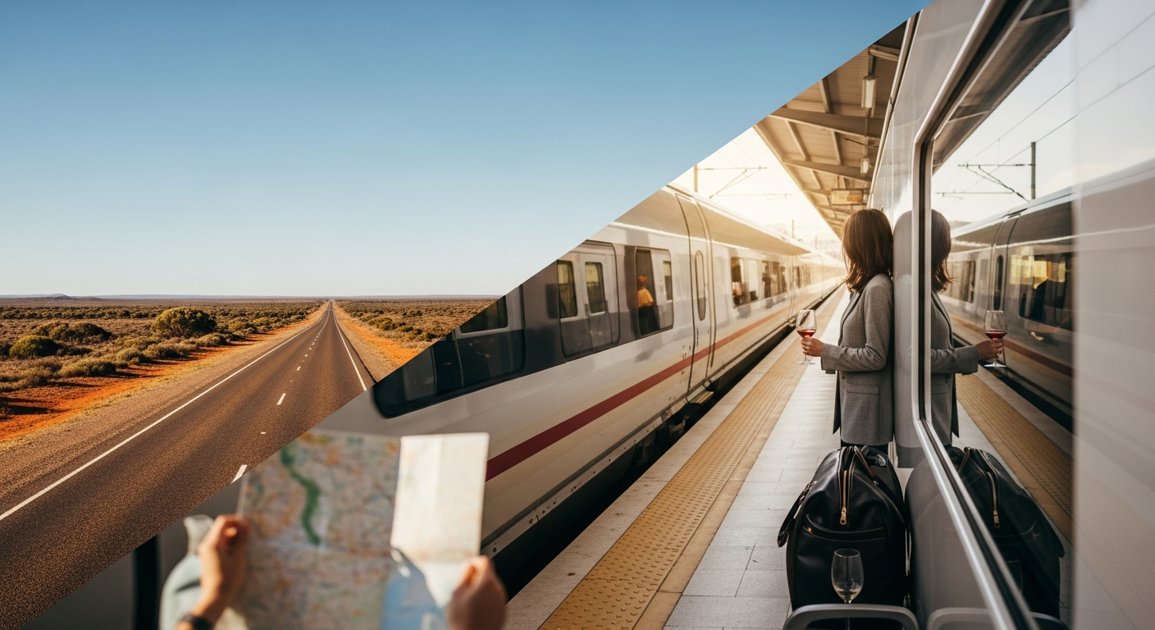
The Great Divide: From the Outback to the AVE
For most Australians, the car is more than a vehicle; it’s a survival tool. From the sprawling suburbs of Melbourne to the vast stretches of the Bruce Highway, life is dictated by the availability of parking and the price of unleaded fuel. However, trading the Southern Cross for the Spanish sun involves more than just swapping hemispheres—it requires a fundamental rewiring of how you move. Spain offers a world-class high-speed rail network (AVE) and urban ecosystems where the car is often an encumbrance rather than an asset.
Redefining Distance: Infrastructure at a Glance
Australia’s infrastructure is built on the logic of the 'Great Road Trip,' where long distances are expected and public transport often peters out at the suburban fringe. Spain, conversely, is built on the logic of density. The AVE (Alta Velocidad Española) is one of the most extensive high-speed networks in the world, connecting Madrid to Barcelona, Seville, and Valencia in mere hours. While an Australian might think nothing of a ten-hour drive, a Spaniard views a two-hour train ride as the gold standard of convenience.
The Cost of Ownership vs. the Price of a Pass
When transitioning, the financial shift is significant. Consider the Australian 'sunk costs': registration, comprehensive insurance, maintenance, and the ever-fluctuating petrol prices. In Spain, particularly in major hubs like Madrid, Barcelona, or Bilbao, the cost-to-utility ratio tilts heavily toward public transit.
- Subsidized Travel: Spain frequently introduces 'Abono' schemes, providing free or heavily discounted multi-journey passes for commuter and medium-distance trains.
- The Cost of Congestion: Driving in Spanish city centers often involves 'Zonas de Bajas Emisiones' (Low Emission Zones) which can lead to fines for non-compliant vehicles, alongside expensive underground parking fees.
- Insurance Savings: By eliminating a primary vehicle, many expats save upwards of €1,500 annually on car-related overheads alone.
Embracing the Lifestyle Shift: Walkability and Micro-Mobility
In the Australian suburbs, 'popping to the shops' usually requires a car. In Spain, the '15-minute city' is a lived reality. This shift impacts your health, social life, and stress levels. Life moves from the isolation of a car cabin to the shared spaces of the plaza and the paseo.
The Rise of Urban Micro-Mobility
Spain has aggressively adopted micro-mobility. Cities like Seville and Valencia have invested in extensive, segregated cycle lanes. Services like BiciMad (Madrid) or Bicing (Barcelona) allow you to pick up an electric bike for pennies, bridging the gap between the metro station and your front door.
Your Step-by-Step Transition Strategy
Moving from a car-centric life to a rail-first existence doesn't happen overnight. Follow these steps to ensure a smooth transition:
- Step 1: Research the 'Cercanías': Before choosing a neighborhood, map the local commuter rail (Cercanías) lines. A 20-minute train ride is often more reliable than a 20-minute drive in Spanish traffic.
- Step 2: Get Your NIE Early: To access long-term transport discounts and city-wide bike-share memberships, you will need your Foreigner Identity Number (NIE).
- Step 3: Download the Essential Apps: Install Renfe (national rail), Citymapper (best for urban transit), and Cabify (for those rare moments you truly need a car).
- Step 4: Trial the 'Car-Free' Month: Upon arrival, commit to 30 days without renting a car. This forces you to learn the rhythms of the metro and the shortcuts through the pedestrianized streets.
Plan Your Move with Precision
Navigating the logistical differences between Australia and Spain can be overwhelming, but you don’t have to do it alone. The NewLife.Help comparison tool is designed to simplify your relocation by providing a personalized report that analyzes cost-of-living shifts, transport options, and neighborhood suitability in seconds. Transition from the highway to the high-speed rail with confidence.
Start Your Free Relocation Analysis
Conclusion
Transitioning from Australian car-dependence to Spain’s integrated connectivity is more than a logistical change; it is a liberation. By trading the steering wheel for a rail pass, you gain time to read, space to walk, and a deeper connection to the vibrant street life that defines the Spanish experience. The road ahead isn't a highway—it's a high-speed track to a more sustainable and social way of living.