Driving in Italy: License Swap and Road Rules
Your Italian Road Trip Awaits: Navigating Licenses, Rules, and La Dolce Vita Behind the Wheel
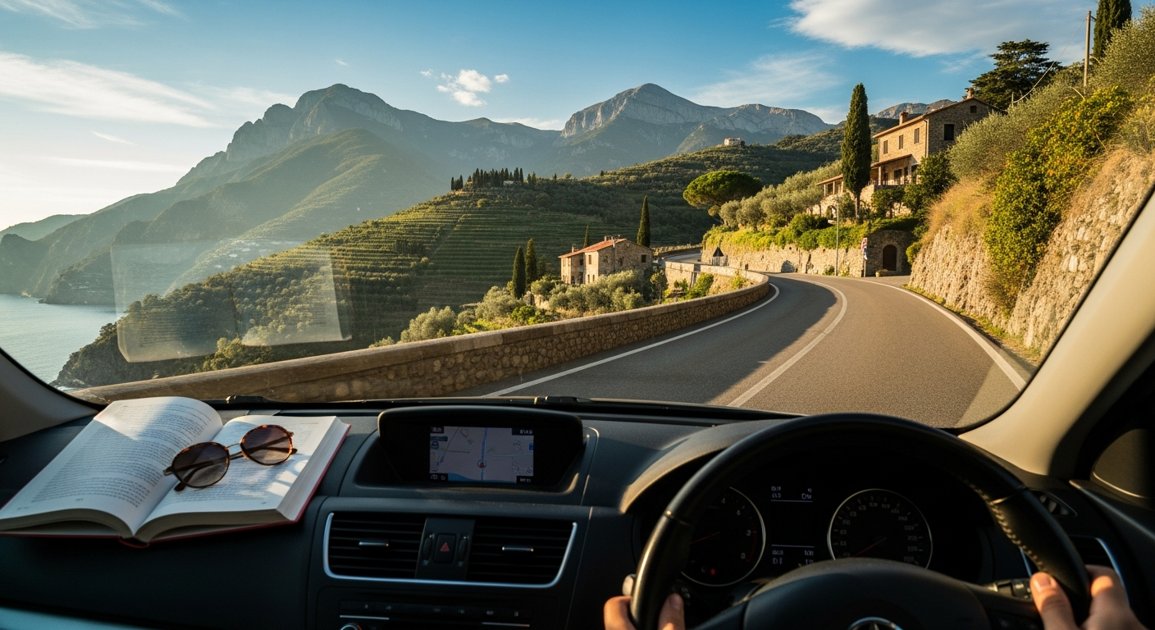
Imagine the sun-drenched rolling hills of Tuscany, the dramatic coastal twists of the Amalfi Drive, or the ancient cobblestone streets of Rome (perhaps not *always* a dream to drive in, but undeniably iconic!). Italy by car offers an unparalleled sense of freedom, allowing you to chase sunsets, discover hidden trattorias, and immerse yourself in the authentic rhythm of Italian life. Whether you're planning a two-week adventure or embarking on the life-changing journey of relocating to Italy, understanding the ins and outs of driving—from license requirements to nuanced road rules—is paramount. This guide is your co-pilot, blending the romance of the open road with practical, actionable advice to ensure your Italian driving experience is smooth, compliant, and utterly unforgettable.
Driving in Italy as a Tourist: Paving the Way for Your Adventure
For short-term visitors, hitting the Italian roads can be an exhilarating experience. However, there are crucial legalities and local quirks to master before you even think about renting that Fiat 500.
Do You Need an International Driving Permit (IDP)?
Yes, absolutely! If you hold a driving license issued outside of the European Union (EU) or European Economic Area (EEA), an International Driving Permit (IDP) is a legal requirement to drive in Italy. Think of it as an official translation of your home country's driver's license, recognized by Italian authorities. You must carry both your valid national driver's license and your IDP at all times while driving. Failure to do so can result in hefty fines.
- Get it Before You Go: IDPs cannot be obtained in Italy. You must apply for one in your home country (e.g., through AAA or similar organizations in the US, post offices in the UK, etc.) before your departure.
- Validity: An IDP is typically valid for one year from its issue date.
Key Italian Road Rules for Tourists
While many rules are universal, Italy has its specific regulations that can trip up even experienced drivers. Pay close attention to these:
- Speed Limits: Generally 50 km/h in urban areas, 90 km/h on secondary roads, 110 km/h on main suburban roads, and 130 km/h on motorways (autostrade). Rain can reduce motorway limits to 110 km/h. Speed cameras are common and strictly enforced.
- ZTLs (Limited Traffic Zones): These are critical! Many historic city centers (like Florence, Rome, Milan) have ZTLs, which restrict access to authorized vehicles (typically residents or public transport) during certain hours. Entering a ZTL without permission results in an automatic fine, often captured by cameras. Look for circular signs with a red border and white center, sometimes with text like "zona traffico limitato."
- Parking:
- Blue Lines: Paid parking. Look for nearby parking meters ("Parcometro") or ticket machines.
- White Lines: Free parking, but often reserved for residents or very short-term (e.g., 30 mins with a "disco orario" – a rotating time disc). Always check signage.
- Yellow Lines: Reserved for disabled drivers or special vehicles. Do NOT park here.
- Headlights: On motorways and major roads, headlights (dipped beams) are mandatory even during the day.
- Roundabouts: Give way to traffic already on the roundabout, unless signs indicate otherwise.
- Seatbelts: Mandatory for all occupants.
- Mobile Phones: Handheld use is illegal. Use hands-free devices only.
- Alcohol Limit: The legal blood alcohol limit is 0.05%. For new drivers (less than 3 years of experience), it's 0.00%.
Moving to Italy: The License Swap Explained for Long-Term Residents
If you're making Italy your home, the rules change significantly. Your tourist IDP won't suffice indefinitely. Understanding the license exchange process is vital to avoid being stranded without legal driving privileges.
Who Needs to Swap Their License?
If you become a resident in Italy and your driving license was issued by a country outside the EU/EEA, you generally have a grace period of one year from the date of officially establishing your residency (as recorded on your *Certificato di Residenza*). During this year, you can typically drive with your valid foreign license accompanied by an IDP. After this one-year period, your foreign license is no longer valid for driving in Italy, and you must either exchange it for an Italian one or obtain an Italian license through a driving test.
Is Your Country's License Exchangeable?
This is the pivotal question. Italy has bilateral agreements with certain non-EU/EEA countries that allow for the direct conversion (exchange) of their driving licenses into an Italian license, often without needing to take a driving test. The list of these countries can change, so it's crucial to check the official Italian Ministry of Infrastructure and Transport (MIT) website or consult a local ACI (Automobile Club d'Italia) office or *Motorizzazione Civile* (Department of Motor Vehicles) office.
- Examples of countries often with agreements: Switzerland, UK (post-Brexit, specific rules apply), some US states (though often partial, requiring a test for some categories), Canada, Australia, Japan, etc. This is NOT an exhaustive or definitive list, and agreements can be subject to change or specific conditions based on license type/age.
- Crucial Step: Confirm if your country has an agreement and what the specific conditions are for your type of license.
The License Swap Process: A Step-by-Step Guide
If your license is exchangeable, here’s a general outline of the process. Be prepared for bureaucracy; patience is key!
- Confirm Eligibility and Gather Documents:
- Your valid foreign driver's license.
- Official translation of your foreign license (often required to be certified by the Italian Embassy/Consulate in your home country or a court-recognized translator in Italy).
- Proof of residency in Italy (e.g., *Certificato di Residenza*).
- Tax code (*Codice Fiscale*).
- Valid ID (passport or *Permesso di Soggiorno*).
- Photos (passport-sized, specific requirements apply).
- Medical certificate (often includes an eye exam and a reaction test, issued by an authorized doctor).
- Application forms (Modello TT 2112) from the Motorizzazione Civile.
- Proof of payments for required fees (*bollettini postali*).
- Undergo a Medical Examination: You'll need to visit a doctor authorized by the Ministry of Transport (e.g., at an ACI office, ASL, or private medical center) for a medical assessment that confirms you are fit to drive.
- Submit Your Application: Take all your meticulously gathered documents, forms, and payment receipts to your local *Motorizzazione Civile* office. Be prepared for potential waiting times.
- Temporary Permit (Optional/Situational): In some cases, once your application is approved and your foreign license is submitted, you might be issued a temporary driving permit (*Permesso Provvisorio di Guida*) while you await your new Italian license.
- Receive Your Italian License: The processing time can vary significantly, from a few weeks to several months. Once ready, you'll be notified to pick up your new Italian driving license.
What if Your License Isn't Exchangeable?
If Italy does not have a bilateral agreement with your home country, or if you miss the one-year grace period, you will need to obtain an Italian driving license from scratch. This involves:
- Taking a theoretical exam (written test, often in Italian).
- Completing practical driving lessons (optional, but highly recommended).
- Passing a practical driving exam with an instructor.
This can be a lengthy and challenging process, particularly due to the language barrier for the written test. Many people opt to enroll in a local driving school (*scuola guida*) to help navigate the curriculum and prepare for both exams.
Navigating Italian Roads Like a Local: Tips and Insights
Beyond the legalities, truly enjoying driving in Italy means understanding the local driving culture.
Understanding ZTLs (Limited Traffic Zones)
Seriously, we can't stress this enough. ZTLs are your biggest threat to unexpected fines. Always assume historic city centers have them. If you must enter one (e.g., your hotel is within a ZTL), contact your hotel beforehand. They can often register your license plate with local authorities for temporary access.
Parking Pains and Pleasures
Parking can be a challenge, especially in popular towns. Download a parking app if available for your region (e.g., EasyPark, MyCicero). When in doubt, look for a paid parking garage (*parcheggio a pagamento*). Better to pay a few euros than face a fine or, worse, get towed.
Driving Style and Road Etiquette
- Be Assertive but Patient: Italian drivers can be assertive, especially in cities. Don't be timid, but also don't lose your cool.
- Small Cars Reign: Narrow streets and tight parking spaces make smaller cars ideal. Consider renting or buying a compact vehicle.
- Honking: Less for anger, more for warning or indicating presence (e.g., blind corners, entering a busy intersection).
- Roundabouts: Master them. They are everywhere.
- Tolls (Pedaggio): Autostrade are toll roads. Look for signs for "Carte" (credit card) or "Cash" lanes. The "Telepass" lane is for automated payment systems and should be avoided unless you have one.
Essential Gear to Keep in Your Car
- Reflective Vest: Mandatory for anyone exiting a broken-down vehicle on the road.
- Warning Triangle: To be placed behind a broken-down vehicle.
- First-Aid Kit: Highly recommended, though not strictly mandatory for private vehicles.
- Documentation: Always have your driving license (and IDP if applicable), vehicle registration (*libretto di circolazione*), and insurance documents handy.
Your Italian Driving & Relocation Checklist
To ensure you're fully prepared, here’s a quick recap:
For Travelers (Short-Term Stays):
- Valid national driver's license.
- International Driving Permit (IDP).
- Credit card for car rental and tolls.
- GPS (or reliable phone navigation with offline maps).
- Awareness of ZTLs in your itinerary.
- Knowledge of basic Italian road signs.
For Relocators (Long-Term Stays & License Swap):
- Research if your country has a license exchange agreement with Italy.
- If yes:
- Gather all required documents (license, translation, residency proof, *Codice Fiscale*, photos).
- Schedule a medical exam.
- Budget for application fees and potential translation costs.
- Be prepared for processing times at the *Motorizzazione Civile*.
- Submit your application within one year of becoming a resident.
- If no (or if you miss the deadline):
- Enroll in a *scuola guida* (driving school).
- Prepare for both the theoretical and practical driving tests in Italian.
- Allocate sufficient time and budget for the process.
- Understand Italian driving culture and nuances (ZTLs, parking, etiquette).
- Ensure your vehicle has the mandatory safety equipment.
Final Thoughts: Embrace the Journey
Driving in Italy, whether for a fleeting vacation or a lifetime, is an adventure in itself. While the paperwork for a license swap can seem daunting, and the ZTLs can be intimidating, the reward is an unparalleled ability to explore Italy's breathtaking landscapes and vibrant culture on your own terms. Approach the journey with patience, meticulous preparation, and a healthy dose of Italian enthusiasm, and you'll soon be navigating the country's roads with confidence, embracing every scenic turn, and truly living *la dolce vita* from behind the wheel.