Can You Actually Keep 100% of Your Remote Income in Croatia? A Data-Driven Guide to the Digital Nomad Tax Exemption, OIB Registration, and Local Cost-Benefit Tiers
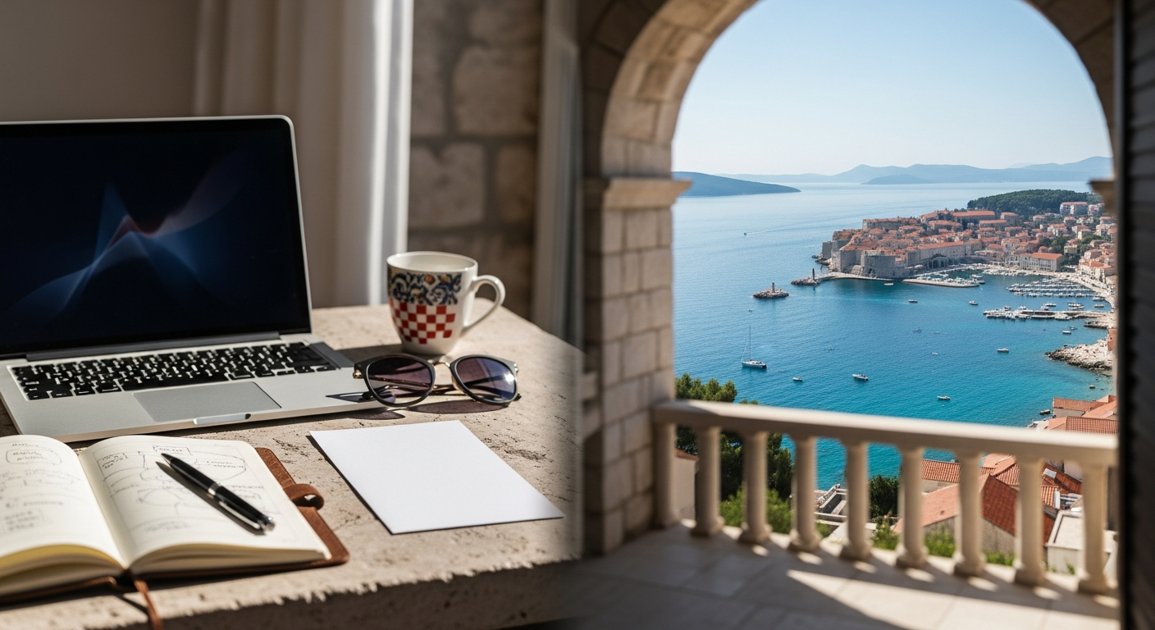
Croatia has positioned itself as one of the most financially attractive destinations in Europe for remote workers. While many countries offer 'nomad visas' that eventually pull residents into the local tax net, Croatia’s Digital Nomad Permit provides a rare legal framework where foreign-earned income remains entirely exempt from local income tax. However, achieving a 100% retention rate requires understanding the mandatory overhead costs and the varying price points of Croatian urban hubs.
The 0% Tax Framework: Article 9 Explained
The primary draw of the Croatian Digital Nomad Permit (officially a stay of up to one year) is the exemption from personal income tax. Under the Croatian Personal Income Tax Act, income realized by digital nomads based on their remotely delivered work for a foreign employer or their own foreign company is not subject to taxation.
- Scope: This applies only to income earned from entities not registered in Croatia.
- Duration: The exemption lasts for the duration of your permit (up to 12 months).
- Local Work: If you perform work for a Croatian client, that specific income is taxable at standard local rates.
The Administrative First Step: OIB Registration
Before you can rent an apartment long-term, sign a contract, or apply for the permit, you must obtain an OIB (Osobni identifikacijski broj). This is your personal identification number and serves as the foundation for all legal transactions in the country.
Step-by-Step OIB Acquisition
- Documentation: You need a valid passport and a completed application form (available at the Tax Administration office).
- Submission: You can apply in person at the local Porezna Uprava (Tax Office) or via email if you are still abroad.
- Processing Time: In-person applications usually result in an OIB certificate being issued on the spot or within 24 hours.
Mandatory Costs: The Health Insurance Factor
While you may keep 100% of your gross income relative to the tax office, you will face mandatory costs that impact your net take-home pay. The most significant of these is health insurance.
To obtain the permit, you must prove you have health insurance. Once registered, most nomads are required to pay into the Croatian state health system (HZZO). As of 2024, the monthly contribution for individuals on a nomad permit is approximately €90 to €100. Additionally, upon arrival, you may be required to pay a 'back-payment' for the previous year if you cannot prove you were covered by an EU-reciprocal health scheme, though this is often waived for third-country nationals who provide private insurance for the initial application.
Local Cost-Benefit Tiers: Split vs. Zagreb
Your true purchasing power depends heavily on where you plant your roots. While the tax exemption remains constant, the 'lifestyle tax' of local rent and services varies significantly.
Zagreb: The Year-Round Business Hub
Zagreb offers a stable rental market and the highest density of amenities. It is generally 10-15% cheaper than the coast during the peak summer months. A one-bedroom apartment in the city center averages €650–€850 per month. Groceries and utilities are standard, making it the best option for those prioritizing consistent overhead costs.
Split: The Coastal Premium
Split offers a higher quality of life for those seeking the Mediterranean climate, but it comes with a 'seasonal volatility' risk. During the summer (June–September), rental prices can triple, and many landlords require nomads to vacate for short-term tourists. To maintain your 100% income advantage here, it is essential to negotiate a year-round 'long-term' contract, which typically ranges from €700–€1,000 for a modern apartment.
Financial Eligibility Requirements
To qualify for the permit and its tax benefits, you must demonstrate a consistent monthly income. As of 2024, the requirement is 2.5 times the average Croatian monthly net salary. This currently equates to approximately €2,539.31 per month, or a lump sum of roughly €30,471 for a 12-month stay. This threshold ensures that nomads contribute to the local economy through consumption rather than through direct income taxation.
Plan Your Move with Precision
Navigating the transition to a new country involves more than just tax calculations; it requires a holistic view of your financial and personal requirements. The NewLife.Help comparison tool provides a personalized relocation report in seconds, factoring in local costs, insurance mandates, and registration steps tailored to your specific income level and family size. Start Your Free Relocation Analysis
Conclusion
Croatia remains one of the few jurisdictions where a 0% tax rate on foreign income is legally codified and accessible. By securing an OIB, budgeting for HZZO health contributions, and carefully selecting between the urban stability of Zagreb or the lifestyle appeal of Split, remote workers can maximize their global earnings. While the 'zero-tax' label is accurate, the most successful relocations are those that account for the mandatory administrative costs and local market fluctuations from day one.